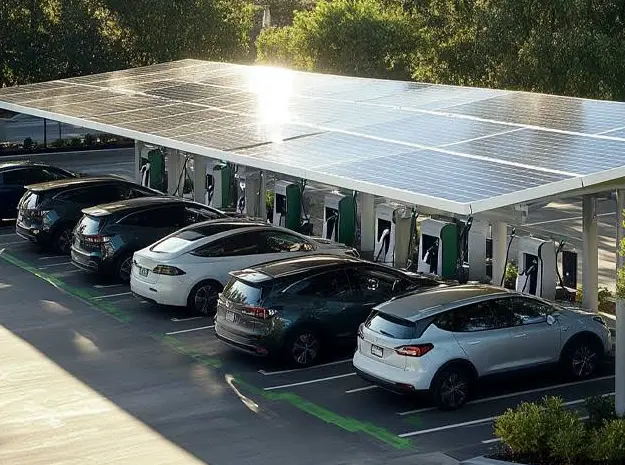
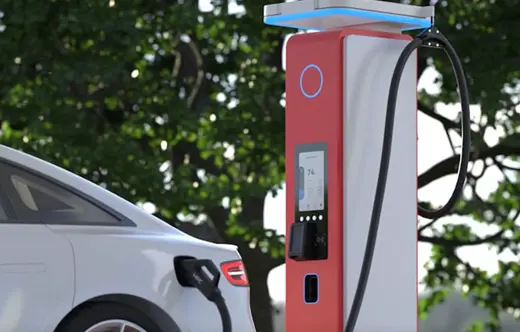
The cost of an EV station can range from a relatively simple home AC charger to a major commercial DC fast-charging project.
A basic home charging station may cost from hundreds to several thousand U.S. dollars, including straightforward installation. A commercial Level 2 AC charging project may cost several thousand to tens of thousands of dollars per connector. A DC fast-charging station can cost tens of thousands of dollars per charging port, with site construction, utility upgrades, and operating requirements potentially increasing the total investment significantly.
The final cost depends on charger type, power rating, number of connectors, site electrical capacity, cable distance, civil work, software, payment systems, maintenance, and local permitting requirements.
For this reason, the best way to estimate an EV station cost is to separate the project into equipment cost, installation cost, utility cost, and long-term operating cost.
Typical EV Station Cost by Charging Type
The following figures are broad planning ranges in U.S. dollars. Actual pricing varies by country, electrical standards, equipment configuration, labor rates, site conditions, taxes, incentives, and project scale.
| EV Station Type | Typical Application | Indicative Equipment Cost | Typical Total Project Consideration |
| Basic AC home charger | Private homes and garages | Hundreds to low thousands | Electrical-panel capacity and cable route affect cost |
| Advanced AC home charger | Smart home charging | Around $1,000 to several thousand | May include load management and app functions |
| Commercial AC Level 2 station | Offices, apartments, hotels, retail | Several thousand per connector | Installation, network functions, and civil work can be significant |
| Fleet AC charging system | Depots and workplace fleets | Varies by number of vehicles | Requires load management and future expansion planning |
| DC fast-charging station | Public, highway, taxi, and fleet sites | Tens of thousands per port | Utility upgrades and construction may exceed equipment cost |
| High-power DC station | High-traffic public locations | Higher than standard DC fast charging | Requires detailed power, cooling, and grid-capacity planning |
A low-cost charging unit can become an expensive project if the site requires a new transformer, switchgear upgrade, trenching, long cable runs, parking-lot reconstruction, or extensive utility work.
What Is Included in the Cost of an EV Station?
An EV station is more than the charging unit mounted on a wall or pedestal.
A complete project may include:
- Charging hardware
- Charging connectors and cables
- Electrical panel upgrades
- Circuit breakers and protective devices
- Transformer or switchgear upgrades
- Underground cable installation
- Trenching and civil work
- Concrete pads or mounting bases
- Parking layout and signage
- Energy meters
- Network communication equipment
- Payment-system integration
- Load-management software
- Remote monitoring
- Permits and inspections
- Installation labor
- Commissioning and testing
- Ongoing maintenance
For public and commercial charging projects, the equipment price may represent only part of the total budget.
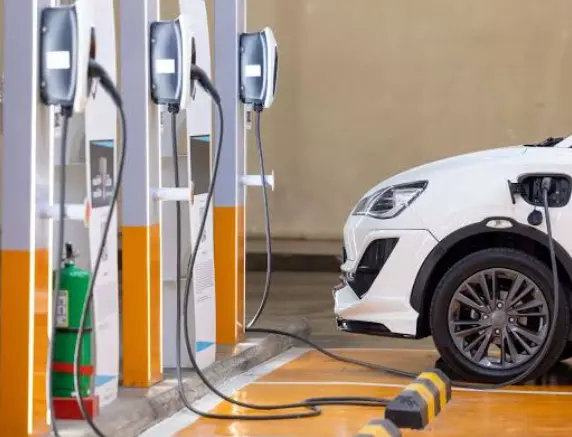
How Much Does a Home EV Station Cost?
For most homeowners, an AC charging station is the most practical option. The total cost depends on whether the existing electrical panel has enough available capacity and whether the parking location is close to the installation point.
A simple home EV station project may include:
- AC charging unit
- Dedicated circuit
- Electrical protection
- Cable installation
- Wall mounting or pedestal mounting
- Basic commissioning
A straightforward installation can be much less expensive than a project that requires a service-panel upgrade, long underground cable runs, garage renovation, outdoor trenching, or significant electrical modifications.
Before purchasing, homeowners should confirm:
- Vehicle charging compatibility
- Available electrical capacity
- Indoor or outdoor installation location
- Required cable length
- Local electrical requirements
- Future EV ownership plans
- Need for smart scheduling
- Need for load management
A qualified electrical professional should assess the site before installation.
How Much Does a Commercial AC Charging Station Cost?
Commercial AC charging stations are common at offices, apartment buildings, hotels, shopping centers, hospitals, warehouses, and destination-parking locations.
The total cost can vary widely because commercial projects may need multiple ports, access control, billing, data reporting, and network management.
Commercial AC costs may include:
- Charger hardware
- Pedestal or wall mounting
- Multiple charging connectors
- Parking-space marking
- Energy meters
- User authentication
- RFID or app access
- Billing platform
- Network subscription
- Electrical distribution upgrades
- Cabling and trenching
- Project-management and permitting costs
For multi-user sites, the best EV station is often not the highest-power unit. A well-designed AC system with dynamic load management may allow more vehicles to charge without requiring an immediate large electrical-service upgrade.
How Much Does a DC Fast-Charging Station Cost?
DC fast charging is designed for drivers, fleets, and public locations that need shorter charging times.
A DC fast-charging project usually has a higher cost because it requires higher power, more complex electronics, stronger electrical infrastructure, and greater thermal-management capability.
Typical DC fast-charging cost factors include:
- DC charger output rating
- Number of charging ports
- Connector configuration
- Utility-service capacity
- Transformer upgrade
- Switchgear and protection equipment
- Civil construction
- Cable trenching
- Network connectivity
- Payment system
- Canopy, lighting, and security
- Maintenance agreement
- Demand charges, where applicable
For high-power stations, the electrical-service upgrade can be one of the largest project expenses. A detailed site assessment is essential before selecting equipment.
Why Installation Can Cost More Than the Charger
Many buyers focus on charger hardware price but overlook installation complexity.
Installation cost can increase when a site needs:
- Long cable routes
- Road or parking-lot excavation
- New electrical panels
- Transformer upgrades
- Higher utility capacity
- Limited space for electrical equipment
- Concrete foundations
- Drainage changes
- Network connection
- Accessibility modifications
- Weatherproof enclosures
- Fire-safety coordination
- Permit revisions
A charger located close to an existing electrical panel may be much less expensive to install than the same charger placed across a large parking area.
What Makes an EV Station More Expensive?
Several features can increase equipment and project costs.
Higher power output
Higher-power AC and DC systems generally require more robust electrical equipment and may require additional site infrastructure.
Multiple connectors
Installing several connectors increases equipment cost, but grouping chargers in one planned location can sometimes reduce installation cost per connector.
Smart-network functions
Commercial stations may require remote monitoring, payment capability, data reporting, fault alarms, access control, and software integration.
Outdoor installation
Outdoor EV stations may require weather protection, impact resistance, secure mounting, cable management, lighting, signage, and additional civil work.
Electrical-capacity upgrades
If the existing building supply cannot support the required charging demand, upgrades to panels, transformers, switchgear, or utility service can significantly affect the project budget.
How Can You Reduce EV Station Cost?
Cost reduction should focus on efficient planning rather than reducing electrical safety or equipment quality.
Practical ways to improve project value include:
- Select charging power based on actual parking duration
- Install chargers close to available electrical capacity
- Group charging stations in one location
- Use dynamic load management
- Plan conduit and cable routes for future expansion
- Install infrastructure in phases
- Choose equipment with remote diagnostics
- Match connector type to the target vehicle market
- Assess utility capacity before final equipment selection
- Use a qualified installer familiar with EV charging systems
For example, a workplace where vehicles remain parked for eight hours may not need DC fast charging. A properly designed AC charging system can be more cost-effective and better aligned with daily use.
What Is the Operating Cost of an EV Station?
Operating cost is an important part of the total EV station investment.
Ongoing costs may include:
- Electricity consumption
- Demand charges
- Network-service fees
- Payment-processing fees
- Software subscriptions
- Preventive maintenance
- Repair and replacement parts
- Site cleaning
- Data communication
- Insurance
- Customer support
- Warranty-extension costs
Public and commercial operators should evaluate both capital cost and long-term operating cost before setting charging prices or estimating return on investment.
How to Budget for an EV Station Project
A practical EV station budget should include four categories:
- Equipment cost – charging station, connectors, meters, and accessories.
- Installation cost – labor, cabling, electrical work, civil work, permits, and commissioning.
- Utility cost – service upgrades, transformer requirements, demand charges, and energy use.
- Operating cost – maintenance, software, communication, payment systems, and repair support.
This approach provides a more realistic project estimate than comparing charger prices alone.
Conclusion
An EV station can cost from a relatively affordable home AC charging installation to a major investment for commercial DC fast charging.
The total cost depends on charging type, output power, connector quantity, site electrical capacity, installation complexity, software requirements, and long-term maintenance needs.
For homes, an AC charger may provide the best value. For workplaces, apartments, and fleets, managed AC charging can offer scalable capacity. For public sites and rapid-turnover fleets, DC fast charging may be the right solution when the site electrical infrastructure can support it.
For EV station pricing, AC and DC charging solutions, and project-specific technical support, please contact Dingsheng Electric.
FAQ
How much does a home EV station cost?
A home EV station can cost from hundreds to several thousand U.S. dollars, depending on charger features, electrical-panel capacity, cable distance, labor, and local requirements.
How much does a commercial EV station cost?
Commercial AC charging projects can cost several thousand to tens of thousands of dollars per connector after equipment, installation, networking, and site work are considered.
Why are DC fast-charging stations expensive?
DC fast-charging stations require higher-power equipment, stronger electrical infrastructure, more complex electronics, and often significant utility or construction work.
What is the biggest cost in an EV charging project?
For some projects, electrical upgrades, trenching, cable routing, transformers, switchgear, and utility work can cost as much as—or more than—the charging equipment itself.