Direct Answer: Choose a UPS when the primary requirement is continuous, conditioned power for interruption-sensitive loads. Choose a battery energy storage system when the project needs energy shifting, peak-demand control, renewable integration or longer-duration backup that has been specifically engineered. A BESS can support critical loads, but it should not be treated as a UPS without verified transfer, islanding and power-quality performance.
The two systems may both contain batteries and power electronics, yet they are purchased for different control objectives. A UPS is normally evaluated by load continuity, output quality, overload behavior, bypass arrangement and autonomy. A grid-integrated BESS is normally evaluated by power, usable energy, duty cycle, dispatch strategy, point of connection, safety systems and the economic services it must perform.
Buyers reviewing Dingsheng’s commercial and industrial energy storage range should begin with the load and operating objective. The question is not which technology sounds more advanced. The question is what must remain powered, how quickly the system must respond, for how long, and what the system should do during normal grid operation.
What Is the Core Difference Between BESS and UPS?
The primary function of a UPS is to ensure continuity of an AC power source and, depending on topology, maintain output within specified power-quality characteristics. IEC 62040-3 addresses performance and test requirements for complete UPS systems. The UPS decision therefore starts with the critical load’s tolerance for interruption and disturbance.
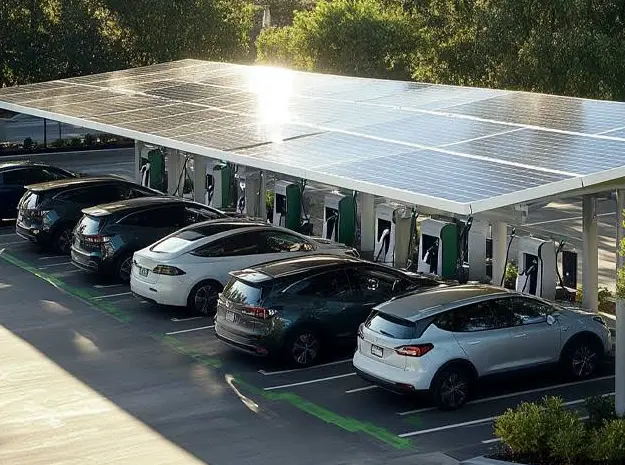
A battery energy storage system is a grid-integrated energy asset. It can charge and discharge according to an energy-management strategy. Typical project objectives include peak shaving, time-of-use shifting, photovoltaic self-consumption, demand response, capacity support and backup for selected loads where the architecture supports it.
The overlap creates confusion. A modern UPS can sometimes participate in energy optimization, and a BESS can sometimes provide backup power. Neither statement proves that one product can replace the other in a specific project. The buyer must compare system topology and tested performance against the load requirement.
How Sensitive Is the Load to an Interruption?
List loads by consequence, not only by kilowatts. Servers, process controllers, safety systems, medical or laboratory equipment and sensitive automation may react to a very short interruption or voltage disturbance. Pumps, HVAC equipment, refrigeration and general production loads may tolerate a longer transfer but require much more energy.
For every load group, document permissible interruption time, voltage and frequency limits, starting current, harmonic sensitivity, power factor, restart behavior and required autonomy. The system can then be designed around critical-load buses rather than an undefined request to “back up the factory.”
A recurring specification error is stating that backup must be seamless without defining a measurable transfer limit or the equipment that must ride through. A supplier cannot validate continuity from an adjective. The requirement needs a time value, a load profile and an acceptance test.
When Is a UPS the More Suitable Choice?
A UPS is usually the stronger route when an interruption-sensitive load needs conditioned AC power and a defined continuity architecture. The buyer should compare online, line-interactive or other appropriate topologies through the project specification, along with static bypass, maintenance bypass, redundancy, battery autonomy and fault-clearing behavior.
UPS runtime is often designed to bridge a short outage, support orderly shutdown or cover the interval before a generator starts. Extended battery strings can increase runtime, but longer autonomy changes space, cooling, maintenance and battery-replacement economics. It may be inefficient to size a UPS for hours of broad facility load when only a small group needs uninterrupted power.
Choose the UPS boundary carefully. If critical controls have UPS power but their network switches, cooling, actuators or upstream auxiliaries do not, the process may still fail. A load dependency map is more useful than a list of equipment names.
When Is a BESS the More Suitable Choice?
A BESS becomes more relevant when the project must move energy across time, reduce a demand peak, absorb renewable generation or support a larger load for a defined duration. The power rating determines how much load can be served at one time; usable energy and operating limits determine how long the service can continue.
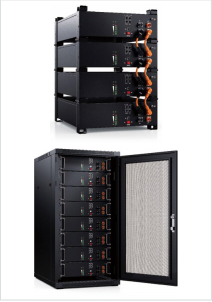
Dingsheng lists the BESS-PLUS 500GP energy storage system within its energy-storage portfolio. The catalog identifies the E-MATE 500GP model family and battery-module data, but buyers should request the complete offered system boundary: usable energy, charge/discharge power, PCS, EMS, protection, cooling, fire-safety scope, enclosure, transformer or switchgear interfaces, communication and commissioning.
A BESS that supports backup needs more than battery capacity. The design must establish a stable voltage and frequency reference where required, isolate the intended island from the grid, protect the islanded network, manage load pickup and coordinate restoration. If those functions are absent or outside scope, the BESS may stop during a grid outage even though stored energy is available.
Can a BESS Replace a UPS for Critical Loads?
A BESS can replace some UPS functions only when its architecture and tested performance meet the critical load requirement. The buyer should verify detection and transfer behavior, inverter operating mode, grid-forming or other islanding capability where needed, output quality, overload response, black-start sequence, bypass path and recovery after the grid returns.
For loads that cannot accept the BESS transfer behavior, a hybrid design may be more appropriate. A local UPS can protect controls and electronics through the transition, while the BESS supplies longer-duration energy to a wider essential-load bus. The two systems then solve different parts of the continuity problem.
Do not assume that a millisecond claim taken from one component proves end-to-end system performance. Protective devices, transfer switches, control logic, transformer energization and load startup all affect what the equipment actually experiences.
Which System Better Supports Energy-Cost Objectives?
A conventional UPS is normally justified by avoided downtime and power-quality protection. A BESS may also create value during normal operation through peak shaving, tariff shifting, photovoltaic capture or other grid services allowed by the market and interconnection agreement.
Economic comparison should model the dispatch duty, not only installed kWh. Reserve kept for backup cannot simultaneously be used for arbitrage. Frequent cycling can affect degradation and warranty conditions. Demand savings depend on the tariff’s measurement window and the ability to forecast or control the site’s peak.
The existing article on why energy storage quotations differ at the same kWh explains why PCS, EMS, cooling, safety and commissioning boundaries change cost. A BESS-versus-UPS decision should be made before quotations are compared, because the two scopes may be solving different problems.
What Safety and Compliance Boundaries Differ?
UPS and BESS projects do not automatically follow the same product and installation standards. IEC 62040-1 covers UPS safety requirements, while the IEC 62933 series addresses grid-integrated electrical energy storage systems, including system-level safety considerations. The applicable national codes, fire requirements, grid rules, building conditions and authority approvals depend on the destination and installation.
For a BESS, the safety review should consider the full system and its interactions: cells and modules, battery management, power conversion, DC protection, thermal management, ventilation where relevant, detection, fire mitigation, emergency response, enclosure, separation distances and site access. A component certificate is not a substitute for a project-specific system review.
For a UPS, confirm input/output protection, bypass arrangement, earthing, ventilation, battery technology, maintenance access and coordination with the critical-load distribution. Ask the supplier to identify which evidence applies to the exact offered model and configuration.
How Should Buyers Compare the Two Options?
| Decision criterion | UPS emphasis | BESS emphasis | Buyer evidence |
| Primary objective | Continuity and power conditioning | Energy dispatch, grid support and engineered backup | Written operating modes and priority order |
| Interruption tolerance | Designed around sensitive-load continuity | Transfer performance depends on system architecture | End-to-end transfer and power-quality test |
| Duration | Often short bridge or shutdown autonomy | Selected from usable energy and duty cycle | Load profile, reserve policy and runtime calculation |
| Normal-grid operation | Power protection; energy services may be secondary | Peak shaving, shifting and renewable integration may be primary | Dispatch model and tariff assumptions |
| System boundary | UPS, batteries, bypass and critical distribution | Battery, PCS, EMS, auxiliaries, protection and grid interface | Single-line diagram and scope matrix |
| Acceptance | Load continuity, bypass, overload and autonomy | Power/energy, controls, safety functions and operating modes | FAT, SAT and commissioning procedures |
What Data Is Needed to Size the Correct Architecture?
Collect interval load data, critical-load submetering, one-line diagrams, outage history, voltage events, motor-starting requirements, power factor, harmonic information, generator and photovoltaic data, utility tariff, interconnection limits, desired backup duration, available space and environmental conditions.
For a BESS, define the required power, usable energy, state-of-charge reserve, charge source, cycle profile and end-of-life performance basis. The guide to sizing C&I energy storage from interval load data helps structure the demand and energy inputs. For a UPS, obtain the protected-load step profile and interruption tolerance at a finer time scale where needed.
Review the alternative BESS size and architecture rather than scaling only one product name. Dingsheng’s BESS-200kWh system route can serve as a portfolio comparison point, but the buyer must verify the offered system’s complete power, energy and interface scope for the actual project.
Representative Scenario: One Facility Needs Two Kinds of Continuity
Representative scenario — not a claimed customer case.
Business Background: A food-processing plant wants to reduce demand peaks and keep essential operations available during utility outages.
Problem: The initial RFQ asks one large battery system to provide seamless support for PLCs, communications, refrigeration compressors and general production loads.
Cause: The project combines interruption-sensitive controls with high-energy mechanical loads but does not classify their transfer tolerance or startup behavior.
Solution: The plant separates the critical control bus from the essential energy bus. A UPS protects controls and network equipment through disturbances, while an engineered BESS is evaluated for demand management and longer-duration support of selected loads, subject to islanding and motor-start studies.
Buyer Decision Value: The architecture avoids oversizing one device for incompatible duties and gives each acceptance test a clear performance target.
What Should Buyers Send in a BESS-or-UPS RFQ?
Send the single-line diagram, interval load profile, critical-load list, maximum permitted interruption, voltage and frequency limits, starting loads, required autonomy, grid and generator arrangement, solar data, operating objectives, tariff structure, installation environment, space limits, applicable codes, safety requirements, communication needs, FAT/SAT expectations, destination and project schedule.
Use the Dingsheng energy system application review to submit those inputs. The supplier can then identify whether the enquiry needs a UPS, a BESS, or a coordinated architecture and clarify which components and services belong in the quotation.
Frequently Asked Questions
Is a battery energy storage system the same as a UPS?
No. Both may use batteries, but a UPS is primarily designed for supply continuity and power quality, while a BESS is typically designed for energy dispatch and grid-integrated services.
Can a BESS provide backup power during a grid outage?
Yes, if the system is specifically designed for backup, including isolation, inverter operating mode, protection, controls and a defined essential-load bus. Stored energy alone is insufficient.
Which option gives longer runtime?
Runtime depends on usable energy and load. BESS projects often target longer-duration energy duties, but either system must be sized from a verified load profile and reserve policy.
Can a UPS reduce demand charges?
Some modern UPS systems can support energy-management functions, but that capability is model- and configuration-specific. Verify control permissions, battery duty, warranty and tariff value.
Why might a project use both UPS and BESS?
A UPS can protect interruption-sensitive controls while a BESS supports longer-duration essential loads and normal-grid energy objectives. The coordinated design separates response speed from energy duration.
Should BESS and UPS quotations be compared by kWh?
No. Compare their purpose, rated power, usable energy or autonomy, transfer behavior, output quality, bypass or islanding scope, safety systems, controls and commissioning responsibilities.
What is the first decision before requesting a quotation?
Classify the loads by interruption tolerance and consequence of loss. That decision determines whether continuity, energy duration or a hybrid architecture should drive the specification.