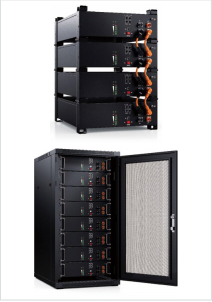
Direct Answer: Two quotations with the same kWh can describe different systems because kWh measures energy capacity, not complete project duty or supply scope. Normalize continuous power, usable energy, duration, operating window, degradation basis, PCS, EMS, electrical equipment, cooling, fire-protection provisions, testing, commissioning, warranty, logistics, and exclusions before comparing the total energy storage system cost.
This comparison is intended for industrial facility owners, commercial property operators, energy developers, electrical contractors, microgrid integrators, distributors, charging operators, and OEM buyers who are reviewing C&I battery storage bids. Their main risk is not simply paying too much. It is approving a low headline price for a proposal that cannot deliver the required power, excludes essential integration work, uses a different usable-energy basis, or transfers commissioning and lifecycle responsibilities back to the buyer.
Dingsheng supplies electrical and new-energy equipment for project applications. Buyers can first review the energy storage product category, then use the normalization method below to determine whether each quoted configuration covers the same technical and commercial boundary.
What Does the Same kWh Rating Actually Prove?
A stated kWh value confirms only one part of a battery proposal. It does not, by itself, identify whether the value is nominal or usable, whether it is measured on the DC or AC side, how much power can be delivered, how long that power can be sustained, or what capacity remains under the quoted warranty conditions.
| Headline Item | What It May Confirm | What It Does Not Confirm | Cost Risk for the Buyer |
| Battery capacity in kWh | A stated energy-capacity value for the proposed battery configuration | Usable state-of-charge window, AC-delivered energy, reserve, losses, or end-of-life capability | A lower-priced quote may provide less usable energy than another quote with the same headline capacity. |
| System power in kW | A stated charge or discharge power level | Continuous versus peak rating, duration, temperature derating, or simultaneous auxiliary demand | The proposed system may not meet the project’s actual peak-shaving or backup duty. |
| Duration | The relationship between stated power and stated energy | Whether the duration is based on nominal energy, usable energy, beginning of life, or another condition | Two “two-hour” offers may have different acceptance-test results. |
| Price per kWh | A simple division of price by a selected capacity figure | PCS, EMS, transformer, switchgear, cooling, fire scope, freight, installation, testing, or service | The cheapest unit price can become the highest installed and commissioned project cost. |
An experienced procurement team therefore asks a basic question before discussing price: Which exact kWh value is being used as the denominator? If one supplier divides by nominal DC energy and another divides by warranted usable AC energy, their price-per-kWh figures are not comparable.
Which Three Boundaries Must Be Normalized Before Prices Are Compared?
A practical bid review separates the proposal into three boundaries: operating duty, equipment scope, and delivery responsibility. Each boundary must be aligned before a commercial ranking is meaningful.
1. Operating Duty Boundary
The operating-duty boundary defines what the system must do. It should state the required charge and discharge power, duration, daily or annual cycle pattern, target operating window, reserve, expected temperature range, and whether the system supports peak shaving, time-of-use shifting, PV use, critical-load support, or another approved objective.
A common buyer mistake is requesting “a 200 kWh system” without specifying the power rating or duty cycle. One supplier may assume a lower-power, longer-duration application, while another may quote a higher-power configuration with different PCS and thermal requirements. Both can use the same kWh description while solving different problems.
2. Equipment Scope Boundary
The equipment boundary defines what is physically and digitally included. It may involve battery modules, racks, DC protection, PCS, EMS, metering, communications, transformer, switchgear, auxiliary power, enclosure, cooling, detection, project-required fire provisions, cables, connectors, monitoring, and documentation.
Industry experience shows that a one-line equipment description often hides the largest quotation differences. The buyer should require a component-level supply matrix rather than assuming that “BESS” includes every device between the battery cells and the facility’s point of connection.
3. Delivery and Acceptance Boundary
The delivery boundary defines who is responsible for engineering, drawings, factory tests, export packing, freight, unloading, installation, site wiring, utility coordination, commissioning, site acceptance, training, software access, spare parts, warranty service, and corrective work.
This boundary frequently creates hidden cost after order placement. A quotation may look complete until the buyer discovers that protection studies, site commissioning, travel, remote communications, local approvals, or performance testing are excluded.
How Should Power Rating and Duration Be Compared?
Power rating is one of the strongest drivers of BESS cost, even when energy capacity is unchanged. A higher continuous power requirement can change the PCS size, current levels, conductor and protection requirements, heat generation, cooling load, and electrical interface.
Buyers should request the following information in one table:
- Continuous charge power and continuous discharge power
- Any short-duration or peak power rating and its permitted duration
- The power rating at the stated site temperature and altitude
- The usable energy available at the required power level
- The AC-side duration at the required point of measurement
- Charging limits imposed by the site connection or tariff
- Reactive-power or other operating requirements, if part of the project scope
- Power retained under the quoted warranty or end-of-life basis
Another procurement risk is comparing a high-power quote with a low-power quote because both carry the same battery capacity. The lower-power offer may be acceptable for slow energy shifting but unsuitable for a sharp industrial peak. Conversely, purchasing unnecessary power increases PCS and integration cost without automatically increasing the economic value of the project.
Why Must Nominal Energy, Usable Energy, and Delivered Energy Be Separated?
Nominal battery energy, usable battery energy, and energy delivered to the load are related but not identical. The difference can include the allowed state-of-charge window, conversion losses, auxiliary consumption, operating reserve, temperature effects, and the capacity basis used for warranty evaluation.
| Energy Definition | Question the Buyer Should Ask | Why It Changes Quote Value |
| Nominal DC energy | Is this the total nameplate energy of all installed battery modules? | It may include energy outside the permitted operating window. |
| Usable DC energy | What state-of-charge limits, reserve, and temperature conditions define this value? | Different operating windows can produce different usable capacity from similar nominal capacity. |
| Usable AC energy | Where is energy measured, and which PCS and auxiliary losses are included? | This value is closer to the energy available at the project interface. |
| Beginning-of-life capability | What capacity and power are guaranteed at commissioning? | A proposal can meet the initial test but use a different lifecycle basis from competing bids. |
| End-of-warranty capability | What retained-capacity, throughput, cycle, temperature, and operating conditions apply? | Lifecycle value depends on the capability retained under the actual duty profile. |
A useful supplier comparison states both the installed nominal capacity and the guaranteed usable capacity at the agreed measurement point. It also identifies whether the proposed module count includes design margin, operating reserve, or additional capacity intended to maintain the required performance later in the warranty period.
How Do PCS, EMS, Transformer, and Switchgear Change the Quote?
The battery is only one part of a functioning C&I energy storage project. The power conversion system controls the AC/DC power exchange. The EMS applies the dispatch strategy. Metering and communications provide the signals needed for control and verification. Transformers and switchgear may be required to connect the system safely to the facility network.
| System Element | Scope to Confirm | Typical Quotation Difference |
| PCS | Continuous rating, operating voltage, conversion boundary, environmental derating, control modes, and included protection | One bid includes the required PCS; another quotes batteries and treats conversion equipment as an option. |
| EMS | Dispatch functions, communication protocols, metering inputs, remote access, alarms, data retention, and software responsibilities | One bid includes project control logic; another includes only local battery management. |
| Transformer | Voltage transformation, rating, losses, enclosure, protection interface, and supply boundary | The connection voltage requires a transformer that is absent from the lower quote. |
| Switchgear | Isolation, protection, fault rating, metering, interlocks, cable terminations, and coordination inputs | One proposal reaches the site connection point; another stops at the equipment terminals. |
| Auxiliary supply | Cooling, controls, lighting, heating, pumps or fans, standby demand, and source of auxiliary power | Auxiliary consumption reduces net delivered energy and may require additional site equipment. |
A hidden technical cost appears when the battery, PCS, EMS, and site switchgear are purchased under separate assumptions. Voltage, communications, protection, metering, and control responsibilities may not align. The lowest equipment prices do not compensate for late interface redesign, extra engineering, or delayed commissioning.
Why Do Cooling and Fire-Protection Provisions Affect BESS Cost?
Thermal management affects performance, auxiliary consumption, environmental suitability, and lifecycle assumptions. Fire-protection requirements can affect detection, alarm interfaces, ventilation, spacing, enclosure design, suppression or other project-required provisions, civil layout, and approval documentation.
Buyers should avoid treating these items as generic accessories. The required scope depends on the proposed equipment, installation location, site environment, local authority requirements, project standards, and the responsibilities assigned to the supplier and installer.
At minimum, ask each bidder to state:
- The cooling architecture included in the quoted configuration
- The stated operating and storage environment used for performance assumptions
- Any temperature or altitude derating basis
- The auxiliary power included in net-performance calculations
- The detection, alarm, ventilation, shutdown, and project-required fire provisions included
- Required clearances, access, civil interfaces, drainage, and service space
- Items that must be supplied by the local contractor
- Standards, certificates, or approvals that are buyer requirements and still require confirmation
One industry lesson is that an undefined fire-protection line item creates two opposite risks. The supplier may exclude work that the project later requires, or the buyer may pay for a package that does not match the local approval route. The RFQ should define the required outcome and ask the bidder to identify included scope, assumptions, and exclusions without claiming unverified compliance.
How Should Warranty and Duty Cycle Be Normalized?
A longer warranty does not automatically provide greater value. The warranty must be read together with cycle limits, energy throughput, operating temperature, state-of-charge window, charge and discharge rates, retained-capacity definition, maintenance obligations, availability calculation, and exclusions.
For comparable bids, request a warranty schedule covering:
- Warranty term and starting date
- Permitted duty profile and number of cycles or throughput basis
- Capacity-retention basis and measurement method
- Operating conditions and maintenance requirements
- Availability definition and excluded downtime
- Parts, labor, travel, freight, software, and replacement responsibilities
- Response route for remote diagnosis and on-site service
- Remedy when the system does not meet the agreed performance threshold
A frequent buyer mistake is choosing the warranty with the longest calendar term while ignoring whether the planned daily dispatch exceeds the quoted throughput or cycle assumptions. The warranty should be evaluated against the actual operating model, not against a brochure headline.
Which Testing and Commissioning Items Should Be Priced?
Testing converts supplier statements into evidence. A complete quotation should distinguish factory testing, document review, pre-shipment inspection, site commissioning, site acceptance, performance demonstration, operator training, and post-commissioning support.
| Project Stage | Evidence or Service to Request | Commercial Point to Confirm |
| Design approval | Configuration list, drawings, single-line diagram, interfaces, control description, and deviation schedule | Number of review cycles, responsibility for revisions, and approval impact on lead time |
| Factory stage | Factory test plan, inspection records, functional checks, labeling, and packing verification | Witness requirements, included tests, optional tests, and corrective-action process |
| Delivery and installation | Shipping documents, unloading requirements, installation instructions, cable and civil interfaces | Incoterm, packing, inland transport, unloading, storage, and local installation responsibility |
| Commissioning | Energization checks, communications, control modes, protection interfaces, alarms, and training | Travel, labor, remote support, tools, local personnel, and schedule assumptions |
| Acceptance | Agreed power, usable energy, duration, dispatch response, data logging, and reserve behavior | Acceptance limits, retest rules, delay responsibility, and remedy for nonconformance |
Another hidden cost appears when commissioning is described as “support” without defining whether that means documentation, remote guidance, or qualified personnel at the site. The quotation should identify the exact service, duration, prerequisites, exclusions, and acceptance deliverables.
Why Can the Lowest Price per kWh Produce the Highest Installed Cost?
The lowest price per kWh can be misleading when the quotation excludes equipment or services required to reach operational acceptance. Buyers should calculate both the supplier price and the expected total cost to place the system into service.
| Potential Exclusion | Why It Is Missed | Possible Consequence |
| PCS, transformer, or switchgear | The quote is presented as a battery package rather than a connection-ready system. | Additional procurement, interface engineering, and schedule risk |
| EMS integration and metering | Basic local controls are mistaken for project dispatch capability. | The system cannot execute or verify the intended operating strategy. |
| Cooling and auxiliary supply | Auxiliary equipment is not included in the energy or installation boundary. | Lower net performance and added electrical work |
| Project-required fire provisions | Responsibility is left to “local scope” without a detailed interface. | Approval delay, redesign, or unplanned contractor cost |
| Freight, unloading, and site storage | Suppliers use different Incoterms and packing assumptions. | Quotes with similar equipment prices have different landed costs and risk transfer. |
| Commissioning and acceptance tests | Equipment delivery is treated as project completion. | The buyer pays separately to prove performance or resolve interface issues. |
| Warranty service and replacement logistics | The warranty states a term but not the remedy or cost allocation. | Lifecycle support costs remain with the buyer. |
The buyer decision should therefore compare a normalized, landed, connected, tested, and supported scope. This does not mean every supplier must provide a turnkey project. It means every excluded item must be visible, assigned to a responsible party, and included in the buyer’s total-cost comparison.
How Can Dingsheng Product Pages Support Quote Comparison?
Dingsheng lists different energy storage product references that can be reviewed during early project screening. For example, buyers can review BESS -PLUS 500GP and BESS -200kWh. These pages identify separate catalog options, but a product name or headline capacity should not be treated as a complete project quotation.
For each shortlisted product, the buyer should ask Dingsheng to confirm the exact configuration proposed for the project, including the power and usable-energy basis, included equipment, interfaces, operating conditions, controls, documentation, delivery boundary, testing, warranty assumptions, and exclusions. This allows the product reference to be converted into a comparable project scope.
Dingsheng has also published a project-context update concerning the Taifa cloud energy storage power station project. Buyers can use such project information to understand the company’s energy-storage business context, while still requiring written, configuration-specific evidence for their own application.
What Does a Representative Same-kWh Quote Scenario Look Like?
Scenario: Normalizing two C&I energy storage quotations for an industrial facility. This is a representative procurement scenario, not a claimed Dingsheng customer case.
Business Background: A manufacturing facility requests a battery system for peak shaving and limited critical-load reserve. Two suppliers submit proposals carrying the same headline energy capacity. The procurement team initially compares only the total price and price per kWh.
Problem: Quote A is substantially lower, but its document does not clearly state continuous power, usable AC energy, EMS functions, connection equipment, cooling auxiliaries, site commissioning, or the warranty duty profile. Quote B is more expensive and includes a broader equipment and acceptance scope.
Cause: The RFQ specifies kWh but does not define the power-to-energy ratio, dispatch duty, measurement point, operating reserve, electrical connection, environmental conditions, project-required fire provisions, test procedure, or responsibility matrix. Each supplier has priced a different boundary.
Solution: The buyer issues one bid-normalization schedule. Both suppliers must restate continuous kW, usable energy, duration, beginning- and end-of-warranty assumptions, PCS and EMS scope, transformer and switchgear boundary, cooling and fire provisions, auxiliary demand, freight, commissioning, acceptance tests, warranty remedy, and priced exclusions.
Buyer Decision Value: The revised comparison shows whether Quote A remains less expensive after missing equipment and services are added. The buyer can then choose between a complete supplier scope and a split-contract strategy based on total installed cost, interface risk, schedule, evidence quality, and lifecycle support—not on an unqualified price-per-kWh figure.
What Should a Bid-Normalization Table Contain?
| Comparison Field | Buyer Requirement | Supplier Response Required |
| Application and duty | Primary objective, dispatch schedule, cycles, reserve, and expected operating conditions | Confirmed duty assumptions and any operating limitations |
| Power | Required continuous charge and discharge kW at defined conditions | Guaranteed power, peak rating if applicable, duration, and derating basis |
| Energy | Required usable energy at the agreed measurement point | Nominal DC, usable DC, usable AC, operating window, reserve, and losses |
| Lifecycle basis | Required capability at commissioning and at the stated warranty point | Degradation, retained capacity, throughput, cycles, temperature, and maintenance assumptions |
| Battery and DC scope | Modules, racks, BMS, DC protection, cabling, connectors, and enclosure boundary | Included equipment, quantities, model references, and exclusions |
| PCS and AC scope | Conversion, transformer, switchgear, metering, protection, and connection boundary | Included ratings, interfaces, fault assumptions, and local-contractor scope |
| EMS and communications | Operating modes, controls, protocols, remote access, alarms, and data requirements | Functions, licenses, hardware, communication list, and software responsibilities |
| Thermal and fire scope | Site environment and project-required protection provisions | Cooling, auxiliaries, detection, alarms, ventilation, shutdown, clearances, and exclusions |
| Testing and acceptance | Required factory, site, performance, communication, and training activities | Test plan, acceptance limits, records, personnel, schedule, and retest terms |
| Commercial boundary | Quantity, Incoterm, destination, delivery target, packing, installation, spares, and service | Price breakdown, MOQ, lead time, optional items, exclusions, warranty, and payment milestones |
All bidders should complete the same table and mark every item as included, excluded, optional, buyer-supplied, or subject to confirmation. Blank cells should not be treated as included scope. Deviations should be resolved before commercial ranking and order release.
How Should Buyers Evaluate Supplier Evidence Beyond Price?
A technically credible supplier response should make its assumptions visible. Buyers should look for configuration-specific documents rather than relying only on general product descriptions.
- A clear bill of supply linked to the quoted price
- A power-and-energy schedule with stated measurement points and operating conditions
- Electrical and communications interface information
- A deviation and exclusion list
- Factory and site test responsibilities
- A warranty schedule matched to the proposed duty profile
- A realistic lead-time breakdown covering approval, production, inspection, packing, shipment, and commissioning support
- A defined route for technical questions, nonconformance, spare parts, software support, and service
Supplier selection should balance price with evidence quality, interface control, project responsiveness, and acceptance risk. A slightly higher quotation can offer lower total risk when it provides a complete and verifiable scope. A lower quotation can still be the correct choice when the buyer has competent local integration resources and every excluded responsibility is deliberately assigned.
Frequently Asked Questions
Why is price per kWh not enough to compare BESS quotations?
Because suppliers may use different capacity definitions and supply boundaries. The denominator may be nominal DC energy, usable DC energy, or another value, while the price may include or exclude PCS, EMS, transformer, switchgear, cooling, fire provisions, freight, commissioning, and service.
Does the same battery capacity mean the same system power?
No. Systems with the same kWh can have different continuous and peak kW ratings. Power affects duration, PCS sizing, current, protection, thermal demand, and suitability for peak shaving or backup loads.
Should buyers compare nominal or usable energy?
Compare both, but use guaranteed usable energy at an agreed measurement point for project acceptance. Require the operating window, reserve, conversion losses, auxiliary consumption, temperature, and lifecycle basis to be stated.
How do PCS and EMS affect energy storage system cost?
The PCS determines power conversion and operating capability, while the EMS controls dispatch, metering inputs, communications, alarms, and data. Different ratings, functions, interfaces, and supply boundaries can create major cost differences.
Why do cooling and fire-protection scopes vary between suppliers?
The required scope depends on the equipment configuration, environment, installation layout, project standards, local approval requirements, and the division of responsibility between supplier and local contractor. Each bidder should state included provisions and exclusions.
How should warranties be compared?
Compare the calendar term together with cycle or throughput limits, duty profile, retained-capacity basis, operating conditions, maintenance obligations, exclusions, service response, and replacement responsibility.
What information should be sent before requesting a comparable quotation?
Send the required kW, usable kWh, duration, operating objective, cycle pattern, reserve, electrical single-line diagram, connection voltage, site conditions, controls and communication needs, project-required protection provisions, tests, quantity, destination, Incoterm, delivery target, and service expectations.
Request a Configuration and Quote-Normalization Review
Prepare the project objective, required continuous power, usable energy, duration, duty cycle, operating reserve, connection voltage, single-line diagram, site environment, communications, project-required cooling and fire provisions, testing requirements, quantity, destination, Incoterm, delivery target, and warranty expectations. Submit them through Dingsheng’s contact and project quotation page. The team can review suitable energy storage configurations, identify missing scope, clarify product and electrical interfaces, and return a quotation with stated assumptions, included equipment, documentation, lead time, acceptance responsibilities, and exclusions.