Direct Answer: Size C&I energy storage from timestamped interval demand, not monthly consumption or a single peak value. Calculate discharge power from the demand above the chosen operating target, then calculate usable energy from the duration and shape of each event. Finally, adjust for charging windows, losses, operating reserve, degradation assumptions, PV variability, critical loads, and the site’s electrical interface.
This sizing method is intended for factories, commercial buildings, industrial parks, charging operators, microgrid developers, electrical contractors, energy-service companies, distributors, and OEM project buyers. Their purchasing problem is rarely solved by choosing a battery with the largest advertised kWh. The system must deliver the required kW at the correct time, recover before the next event, preserve any resilience reserve, and connect to the facility without creating an incomplete protection or controls scope. Dingsheng’s energy storage product category provides available product references, but the final system should be selected only after the project load profile and operating objective are defined.
What Must a 15-Minute Load File Contain Before Sizing Begins?
A useful load profile is a timestamped sequence of site demand values. It should show when demand occurs, how high it rises, how long it remains above the proposed target, and how quickly the site can recharge the storage system afterward. A monthly electricity bill may show total energy and a recorded maximum demand, but it does not reveal the shape or recurrence of the event.
Before a supplier calculates C&I energy storage capacity, the buyer should provide:
- At least one representative operating period of timestamped demand data, with the interval length clearly stated
- Seasonal data where production, cooling, heating, or occupancy changes materially through the year
- The facility operating calendar, shift pattern, weekends, shutdowns, and planned production expansion
- The applicable tariff structure, including demand-charge rules and time-of-use periods
- Existing or planned PV generation data at the same time resolution where possible
- Generator operating logic and any limits on parallel operation
- A list of critical loads that must remain supplied during an outage
- The electrical single-line diagram, connection voltage, metering boundary, and available interconnection point
One common buyer mistake is exporting only the highest-demand day. That day can be useful for initial screening, but it may not represent the most difficult charging window, the most frequent peak pattern, or the season with the lowest PV contribution. A second mistake is mixing data from different meters without confirming whether they represent the same electrical boundary. A storage system cannot be sized reliably when the demand file and the proposed connection point describe different parts of the facility.
Which Business Objective Should Control the First Sizing Model?
The first sizing model should be built around one primary operating objective. Peak shaving, time-of-use shifting, PV self-consumption, outage support, and grid services can sometimes share the same system, but they compete for available power, energy, and state of charge. Buyers should not assume that the same stored energy can be committed to every objective at the same time.
| Primary Objective |
Data That Controls Sizing |
Main Buyer Decision |
Risk if the Objective Is Not Prioritized |
| Peak shaving |
Demand above the chosen threshold, event duration, event frequency, and recharge time |
Set the target demand and acceptable residual peak. |
The battery is large in kWh but cannot discharge enough kW to hold the target. |
| Time-of-use shifting |
Tariff periods, energy-price spread, charging window, and daily operating schedule |
Define when charging and discharging are economically permitted. |
The system cycles at the wrong times or has insufficient time to recharge. |
| PV self-consumption |
PV export profile, daytime site load, curtailment, and evening demand |
Determine how much surplus PV is consistently available for storage. |
The buyer sizes from PV nameplate capacity instead of actual surplus generation. |
| Critical-load reserve |
Critical-load kW, outage duration, starting requirements, and load-shedding priority |
Reserve sufficient power and usable energy for the defined load list. |
Commercial dispatch consumes the energy required for resilience. |
| Multiple objectives |
Dispatch priority, minimum reserve, operating constraints, and allowed conflicts |
Approve a written hierarchy for the EMS. |
Financial savings and backup performance are both overstated. |
Industry experience shows that “reduce the electricity bill” is not a complete sizing objective. The buyer must identify which tariff component is being targeted, what operating threshold is acceptable, and whether resilience has priority over savings. Without that hierarchy, two suppliers can submit very different systems while both claiming to meet the same general requirement.
How Should Buyers Separate Power in kW From Energy in kWh?
Power and energy answer different procurement questions. Power in kW determines how much site demand the system can offset at one moment. Energy in kWh determines how long that discharge can be sustained. A system can have enough energy but insufficient power, or enough power but insufficient duration.
For an initial peak-shaving model:
- Required discharge power: compare each interval’s site demand with the approved target and identify the maximum excess demand.
- Load-side energy: add the excess demand across every interval in the event and multiply by the interval duration in hours.
- Event duration: measure the continuous period during which the battery must keep the site at or below the target.
- Recharge requirement: confirm whether the battery can recover before the next peak without creating a new demand peak.
For example, a short, sharp peak may require high kW with modest kWh. A lower but longer production plateau may require less power but substantially more energy. Comparing these two projects only by battery capacity can lead to the wrong PCS power rating, the wrong duration, or an unnecessary increase in battery modules.
A frequent specification mistake is treating a “200 kWh system” as a complete technical description. The buyer still needs the discharge power, usable operating window, intended duration, electrical interface, controls, auxiliary consumption, and operating reserve. This is why the kW-versus-kWh relationship should appear in the RFQ before product prices are compared.
How Should One Peak Event Be Converted Into a Storage Duty?
The useful sizing unit is not the single highest interval. It is the complete event around that interval. The event begins when site demand rises above the chosen target and ends when demand returns below it or the dispatch rule changes.
| Event Review Step |
Buyer Calculation or Check |
Why It Changes the System Size |
| Set the operating target |
Choose the demand threshold the project is expected to maintain. |
A lower target requires more discharge power and more energy. |
| Identify every interval above target |
Calculate the excess kW for each interval. |
The maximum excess controls the minimum power requirement. |
| Integrate the complete event |
Add the excess energy through the event. |
The event shape controls load-side kWh, not only the highest point. |
| Check repeated events |
Measure the time between peaks and the available charging capacity. |
The battery may not fully recover before the next event. |
| Apply operating assumptions |
Include declared usable state-of-charge window, conversion losses, auxiliary loads, reserve, and degradation basis. |
Required installed capacity is greater than the energy delivered to the load. |
| Test difficult days |
Run the same logic across seasonal peaks, low-PV days, and planned future loads. |
A system sized to one favorable day may fail during the actual limiting condition. |
Another hidden risk is allowing the supplier to choose the target demand without the tariff and operating context. An aggressive target can make the project look technically impressive while producing a system whose additional capital cost is not justified. The buyer should evaluate several target levels and compare the incremental demand-charge reduction with the incremental equipment and integration scope.
Why Are Monthly Consumption and One Maximum-Demand Value Not Enough?
Monthly energy consumption can support an annual financial model, but it cannot show whether the storage system must discharge for 15 minutes or four hours. Likewise, a utility bill’s maximum-demand value does not reveal whether the peak happened once, repeated every day, or occurred during a period when charging was impossible.
Relying on summary bills creates at least five procurement risks:
- The proposed kW is based on a peak that occurred only once and may not justify the investment.
- The proposed kWh ignores a long plateau that follows the highest interval.
- The charging model creates a second demand peak after the original event.
- Seasonal production or HVAC demand is not represented.
- The financial model assumes every avoided kW receives the same tariff value.
Where only monthly bills are available, buyers should treat the first quotation as a screening estimate, not a final system design. The RFQ should state the data limitation and require a second sizing review when interval data becomes available. This reduces the risk of turning a preliminary budget into an unverified purchase specification.
How Do Repeated Peaks and Charging Windows Change the Required Capacity?
A battery may complete the first peak-shaving event and still fail the day’s operating objective if the next peak arrives before sufficient recharge. Repeated peaks are particularly important in multi-shift factories, cold-storage sites, EV charging hubs, and facilities with scheduled process starts.
The buyer should model:
- The number of peak events per day
- The minimum time between events
- The site demand during the proposed charging period
- Any maximum charging-power limit at the point of connection
- Whether charging is allowed during an expensive TOU period
- Whether PV is reliably available during the recovery window
- The minimum state of charge that must be preserved for critical loads
A common controls error is using a fixed recharge command that ignores current site demand. The battery reduces one peak, then recharges quickly enough to create another. The EMS logic should coordinate charging with the same demand target used for discharge, while also respecting the project’s reserve and operating schedule.
How Should PV Generation and Critical Loads Be Included Without Double Counting?
PV and storage should be modeled using time-aligned data. PV nameplate capacity does not equal surplus energy available for charging. The battery can absorb only the generation remaining after the site load and other operating constraints are considered.
For PV-coupled C&I energy storage, buyers should distinguish:
- PV production consumed directly by the facility
- PV surplus that would otherwise be exported or curtailed
- Battery charging permitted from the grid
- Expected PV variation by season and weather
- Whether peak demand occurs before, during, or after the PV production window
Critical-load reserve must also be separated from commercial dispatch. If the project requires outage support, the buyer should define the critical-load list, expected simultaneous kW, required duration, permitted load shedding, transition requirements, and minimum reserved state of charge. The financial model should not count reserved energy as fully available for daily peak shaving.
Short-term savings can be overstated when one battery capacity is counted twice: once for demand-charge reduction and again for full-duration backup. A credible proposal shows the dispatch priority and explains what happens when a commercial peak occurs immediately before an outage.
How Should Dingsheng Product References Be Used During Early Sizing?
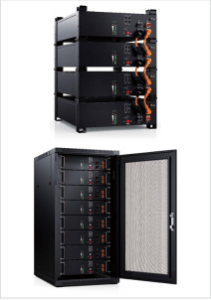
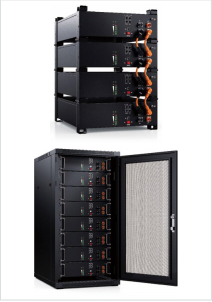
Product pages can help buyers understand available capacity formats, but they should not replace the load-profile calculation. Dingsheng lists the POWER PILE Rack-mounted 5.12kWh as an energy storage product reference. A rack-mounted capacity block may be relevant when a project is being developed from modular storage units, but the buyer should still confirm the complete system architecture, required quantity, operating voltage, power-conversion scope, controls, enclosure, and project acceptance conditions.
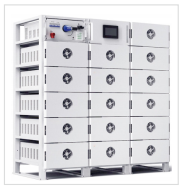
For a larger catalog reference, buyers can also review the E-WALL 200kWh. The product name provides an energy-capacity starting point, not proof that the configuration meets a specific peak-shaving or resilience duty. The supplier should map the selected product configuration back to the approved kW, usable kWh, duration, connection, environment, and operating reserve.
This distinction protects both buyer and supplier. The buyer avoids comparing products that solve different duties, while the supplier receives enough project data to confirm whether a catalog product, a modular combination, or a different system configuration should be quoted.
What Grid, Protection, and Controls Scope Must Be Defined?
A correctly sized battery can still become an incomplete project if the RFQ stops at battery capacity. The system must connect to the facility’s electrical network, coordinate with existing equipment, and operate under a defined control and protection philosophy.
| Interface Area |
Buyer Input |
Supplier Confirmation |
Hidden Cost if Omitted |
| Point of connection |
Voltage, frequency, phase, metering boundary, available space, cable route, and single-line diagram |
Proposed connection arrangement and supply boundary |
Unpriced switchgear, transformer, cabling, civil work, or shutdown requirements |
| Protection |
Fault data, existing protection philosophy, isolation requirements, and utility conditions |
Protection devices, settings responsibility, coordination inputs, and interfaces |
Late redesign or inability to obtain project approval |
| PCS and EMS |
Required kW, charging limit, dispatch priorities, reserve, communications, and metering |
Control logic, communication interfaces, data points, and operating modes |
A battery that cannot execute the intended tariff or resilience strategy |
| Environment |
Indoor or outdoor location, temperature, humidity, dust, altitude, access, and noise constraints |
Environmental assumptions, thermal-management scope, enclosure, and derating basis |
Reduced performance, added site work, or unsuitable equipment placement |
| Commissioning |
Site schedule, test responsibilities, utility witness requirements, and training needs |
Factory tests, site tests, commissioning scope, documents, and exclusions |
Equipment delivery without a complete route to operational acceptance |
Dingsheng’s published update on the Taifa cloud energy storage power station project provides a project-context reference. Buyers should still request configuration-specific drawings, interfaces, tests, and responsibilities for their own site rather than treating any previous project description as a substitute for engineering review.
What Does a Representative Industrial Sizing Scenario Look Like?
Scenario: Peak-shaving and resilience planning for a two-shift manufacturing facility. This is a representative project scenario based on common procurement conditions, not a claimed Dingsheng customer case.
Business Background: The facility experiences a demand-charge peak when several process lines and cooling equipment start within the same hour. It also has rooftop PV and wants selected control, communication, and safety loads to remain available during short grid interruptions.
Problem: The first quotation is based on the monthly maximum demand and recommends a battery capacity without showing the required discharge power, repeated-event behavior, charging window, PV surplus, or reserved energy for critical loads.
Cause: The RFQ includes electricity bills but no 15-minute interval file, no approved demand target, no critical-load schedule, and no single-line diagram. Peak shaving, TOU shifting, PV use, and backup are all listed as equal objectives without a dispatch priority.
Solution: The buyer collects seasonal interval data, defines the primary demand-charge target, separates kW from kWh, models each event and recharge period, and reserves a minimum state of charge for the approved critical-load list. The electrical contractor and system supplier then confirm the connection, protection, EMS logic, commissioning tests, and supply boundary.
Buyer Decision Value: The revised comparison may select a different power-to-energy ratio than the first proposal. The buyer accepts a configuration based on verified event coverage and operating logic rather than choosing the lowest price per kWh. This reduces the risk of underpowered peak shaving, unavailable backup energy, unpriced electrical work, and savings that cannot be demonstrated after commissioning.
Which Acceptance Metrics Should Be Included in the RFQ?
A supplier should not be asked only to quote equipment. The RFQ should define how the proposed C&I energy storage system will be evaluated before shipment, during commissioning, and after the initial operating period.
| RFQ Section |
Buyer Information |
Required Supplier Response |
| Load-profile basis |
File period, interval length, meter boundary, missing-data treatment, and future-load assumptions |
Exact data set and assumptions used in the sizing model |
| Operating objective |
Demand target, TOU schedule, PV logic, resilience reserve, and priority order |
Dispatch logic and any conflicts or limitations |
| Power and energy |
Required discharge kW, event duration, load-side kWh, charging limit, and reserve |
Proposed rated power, installed energy, declared usable energy, and duration basis |
| Performance assumptions |
Required temperature range, degradation basis, losses, auxiliary loads, and future operating year |
All derating, efficiency, reserve, and degradation assumptions used |
| Electrical scope |
Voltage, fault data, point of connection, protection, transformer, switchgear, cable, and metering boundary |
Included equipment, interface drawings, exclusions, and responsibilities |
| Controls and data |
EMS modes, communications, remote access, metering, alarms, and data-retention needs |
Supported interfaces, data points, control hierarchy, and cybersecurity responsibilities |
| Testing and acceptance |
Factory tests, site tests, peak-shaving demonstration, capacity or power test, commissioning, and training |
Test procedure, acceptance limits, records, schedule, and corrective-action process |
| Commercial scope |
Quantity, destination, Incoterm, delivery target, packaging, documentation, spare parts, and service expectations |
MOQ, lead time, exact supply boundary, warranty scope, optional items, and exclusions |
Supplier claims should be converted into measurable acceptance items. “Peak-shaving capable,” “high efficiency,” or “intelligent EMS” are not complete approval criteria. The buyer should require the proposed configuration to demonstrate the agreed demand target, operating duration, reserve behavior, communications, and alarm response under defined test conditions.
Frequently Asked Questions
How much 15-minute data is needed to size C&I energy storage?
Use enough timestamped data to represent seasonal production, occupancy, HVAC, PV, and tariff conditions. A full operating year is preferable when available, but the final period should be selected according to the site’s variability and project stage.
Can monthly electricity bills be used for final battery sizing?
They can support early screening and tariff review, but they normally do not show event duration, repeated peaks, charging windows, or the relationship between demand and PV. Final sizing should use interval data at the relevant meter boundary.
What is the difference between storage kW and kWh?
kW is the instantaneous discharge or charging power. kWh is the energy available over time. Peak shaving requires enough kW to reduce the highest excess demand and enough usable kWh to sustain that reduction through the complete event.
Should the battery be sized to eliminate the highest recorded peak?
Not automatically. The highest peak may be rare or expensive to eliminate. Buyers should compare several demand targets and evaluate the incremental equipment scope against the incremental tariff benefit and operating risk.
How should critical-load backup affect peak-shaving capacity?
Define a minimum reserved state of charge for the approved critical-load kW and duration. Do not count the same reserved energy as fully available for daily commercial dispatch unless the operating hierarchy explicitly permits it.
How does PV change the C&I energy storage calculation?
Use time-aligned PV and load data to identify actual surplus generation and the time of the site peak. PV nameplate capacity alone does not show how much energy is available for charging or whether it coincides with the demand event.
What should buyers send before requesting a project quotation?
Send interval load and PV data, tariff rules, operating calendar, demand target, critical-load list, single-line diagram, connection voltage, fault information, site environment, controls requirements, quantity, destination, delivery target, and required tests and documentation.
Request a Load-Profile and Configuration Review
Prepare the timestamped load profile, interval length, tariff rules, primary operating objective, proposed demand target, PV data, critical-load schedule, charging constraints, single-line diagram, connection voltage, site conditions, quantity, destination, commissioning expectations, and acceptance requirements. Submit them through Dingsheng’s contact and project quotation page. The team can review available energy storage configurations, identify missing sizing or electrical-interface data, compare suitable product formats, and prepare a project-specific proposal with stated assumptions, supply boundaries, documentation, and exclusions.