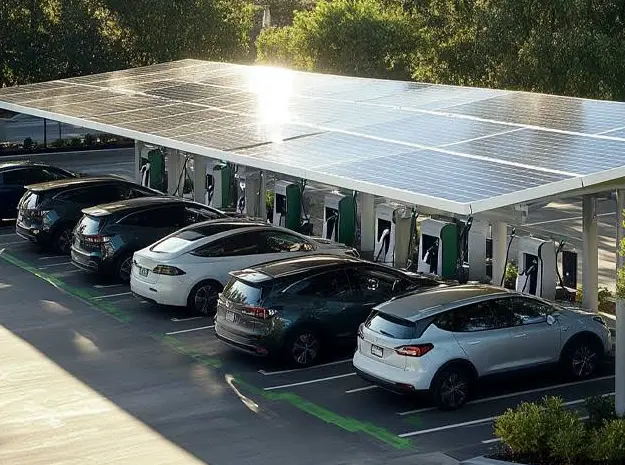
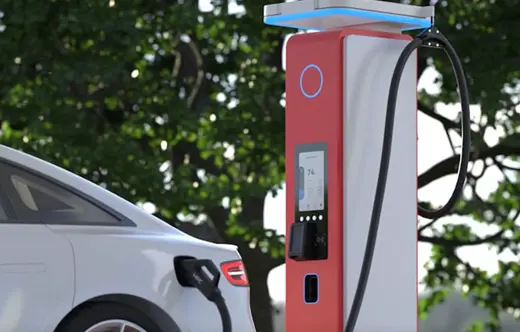
Buyers should qualify a charging pile factory by its ability to convert site and vehicle requirements into one verifiable charger configuration—not by price or rated kilowatts alone. Before requesting a quotation, define the vehicle voltage range, connector and communication requirement, expected simultaneous sessions, power-sharing logic, site input supply, ambient conditions, network or payment workflow, installation boundary and acceptance evidence. Then require the supplier to identify the exact model, options, standards, protection, backend interface and test scope offered. A 160 kW dual-gun label does not prove that both vehicles receive 160 kW simultaneously or that the charger suits every market. A decision-ready RFQ makes those boundaries explicit and requires every assumption, deviation and buyer input to be returned in writing.
Why Should Supplier Qualification Start Before Price Comparison?
A low quotation has little meaning if it assumes a different grid connection, connector, charging protocol, climate, backend or installation scope. These differences can change the hardware, engineering effort, commissioning work and project evidence. Procurement should therefore issue one technical questionnaire to every candidate factory before comparing commercial totals.
Start with the commercial charging station product range to confirm that the supplier offers the required equipment family. Product discovery is only the first step. The supplier must still show how its proposed unit fits the stated vehicles, utility supply, site and operating model.
Which Vehicle and Charging Inputs Must Buyers Provide?
List vehicle makes or technical characteristics, battery-voltage window, maximum accepted DC current, connector type, communication protocol and any fleet-specific charging restrictions. If future vehicles are unknown, define the required envelope rather than assuming universal compatibility.
State how many vehicles may connect at once and the energy each vehicle must receive during its dwell time. A charger can have two guns while using several possible power-sharing strategies. Ask whether output is equal, dynamic, sequential or otherwise controlled and what each connector can deliver under simultaneous use.
What Grid and Site Data Does a Charging Pile Factory Need?
Provide nominal input voltage and frequency, phase arrangement, available site capacity, upstream transformer and switchgear information, prospective fault conditions where required, earthing system and cable route. Also provide installation location, foundation constraints, cable entry, ambient temperature, altitude, humidity, dust, water exposure, ventilation and service clearances.
The factory supplies a charger, but site design may remain with the buyer, EPC or local electrical contractor. The RFQ must define who supplies upstream protection, distribution board, cables, civil foundation, canopy, bollards, lighting, communications, metering, permits and final connection.
Which Questions Create a Comparable Factory Response?
| Decision Area | Buyer Input | Factory Must Confirm | Evidence |
| Vehicle interface | Voltage, current, connector, protocol | Exact supported range and limitations | Datasheet and compatibility statement |
| Simultaneous charging | Number of sessions and dwell time | Output-sharing logic per connector | Configuration description |
| Grid input | Supply and site capacity | Input requirement and tolerance | Electrical schedule |
| Protection | Local code and upstream arrangement | Internal functions and coordination boundary | Single-line diagram |
| Environment | Temperature, altitude, IP need | Operating limits and derating review | Model specification |
| Backend | Network, payment and OCPP needs | Supported interface and integration scope | Protocol/interface document |
| Testing | FAT, SAT and commissioning needs | Tests, witness points and records | Inspection and test plan |
| Delivery | Destination and handover scope | Packaging, documents and responsibilities | Quotation scope matrix |
How Should Buyers Verify the 160 kW Rating?
Rated power should be reviewed together with output-voltage range, current limit, thermal conditions and vehicle demand. A charger cannot deliver its headline power at every combination of voltage and current. The vehicle’s battery management system also controls what power it accepts at each stage of charging.
Ask the factory to show the output envelope and explain how the two connectors share available power. State the project’s expected battery-voltage range and concurrent-use case. Do not calculate station throughput from 160 kW alone; use vehicle energy demand, dwell time, arrival pattern and power-sharing behavior.
What Protection and Safety Boundaries Need Confirmation?
The factory should identify internal functions such as over-voltage, under-voltage, overload, short-circuit, leakage, surge or lightning protection, grounding monitoring and emergency stop where included. The buyer must then coordinate those functions with upstream switchgear, earthing and local code.
A list of protections is not a coordination study. Request a single-line diagram and protection schedule showing the supply boundary. Confirm emergency isolation, cable management, connector holster position, collision protection and safe service access in the site design.
How Should Backend and Payment Requirements Be Qualified?
Network connectivity, operator platform and payment method can decide whether a charger is commercially usable. Specify Ethernet, cellular or other connectivity; user authentication; QR, card or app workflow; tariff and transaction needs; remote monitoring; alarms; firmware support; and required communication protocol.
A factory statement that a charger “supports a platform” should be followed by an integration matrix. Identify which functions have been tested, who provides SIM or network service, who configures the charger, who owns data and who resolves interface problems during commissioning.
What Does the Dingsheng 160 kW Product Page Establish?
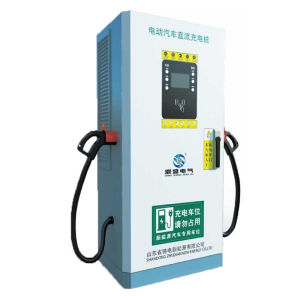
The Dingsheng 160 kW dual-gun DC charging pile page identifies a floor-standing model with a three-phase input, a published DC output range, dual connectors, forced-air module cooling, optional communication interfaces, stated environmental limits and several protection functions. This is a real product basis for evaluation.
It is not permission to assume compatibility with every vehicle, backend or jurisdiction. The buyer should request an order-specific schedule confirming frequency, connector, protocol, output allocation, communications, protection grade, environment and documents. Any inconsistent or market-specific line on a webpage must be resolved in the signed quotation.
Which Factory Capabilities Require Evidence?
Ask how the factory controls incoming components, assembly, wiring inspection, insulation and protective tests, functional checks, output testing, communication tests and final release. Request a sample inspection and test plan rather than a general quality claim.
If the project requires certification, do not accept a logo list. Request the certificate, model coverage, issuing body, current validity and applicable market. A certificate for one family or option does not automatically cover the exact unit quoted.
How Should FAT, SAT and Commissioning Be Separated?
Factory acceptance testing can verify the manufactured charger and simulated interfaces before shipment. Site acceptance testing verifies installation, grid connection, communications and operation under site conditions. Commissioning brings the approved system into service and closes outstanding settings, training and handover records.
Define witness points, test equipment, pass/fail criteria, retest responsibility and required records. A power-on demonstration is not a complete acceptance plan. Where a real vehicle is used, identify model, battery state and test limitations.
What Common RFQ Gaps Create Procurement Risk?
- Only stating 160 kW: voltage, current and simultaneous-output behavior remain unclear.
- Leaving connector and protocol open: the delivered unit may not match the target fleet.
- Ignoring the site supply: transformer, cable and switchgear scope emerges after purchase.
- Assuming backend compatibility: payment and remote operation cannot be commissioned as expected.
- Requesting “all certificates”: quotations include incomparable evidence.
- Mixing equipment and installation scope: gaps appear between factory, EPC and operator.
What Should a Charging Pile Factory RFQ Include?
- Vehicle types and charging interface
- Battery voltage and current envelope
- Connectors and simultaneous sessions
- Required power-sharing logic
- Input voltage, frequency and site capacity
- Earthing and upstream protection data
- Installation location and environment
- Network, payment and backend requirements
- Applicable standards and certifications
- FAT, SAT and commissioning scope
- Documents, training and spares
- Warranty and service requirements
- Quantity, destination and schedule
Send the completed requirement through the Dingsheng charging project inquiry form. Require the factory to mark every line Confirmed, Deviation, Alternative or Buyer Input Required.
Frequently Asked Questions
Does a dual-gun 160 kW charger provide 160 kW to each vehicle?
Not automatically. Confirm total system power and the allocation logic under simultaneous charging.
Can buyers select a charger without naming vehicle models?
They can define a technical compatibility envelope, but voltage, current, connector and protocol must still be stated.
Is an IP rating enough to approve outdoor installation?
No. Temperature, altitude, rain exposure, drainage, dust, sun, corrosion, foundation and service access also need review.
What is the most useful pre-RFQ document?
A common technical questionnaire combining vehicles, grid, site, backend, acceptance and responsibility boundaries makes supplier responses comparable.