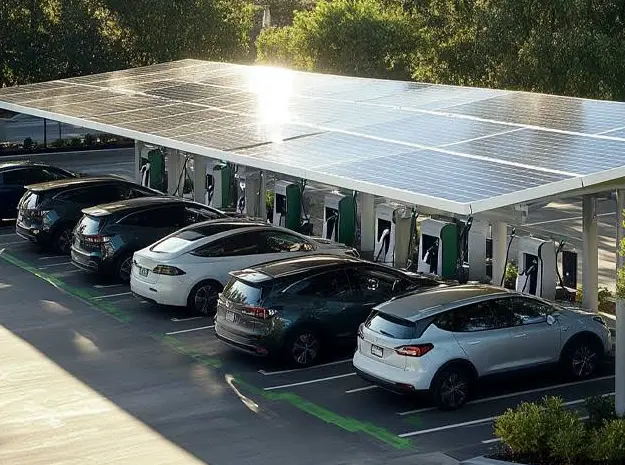
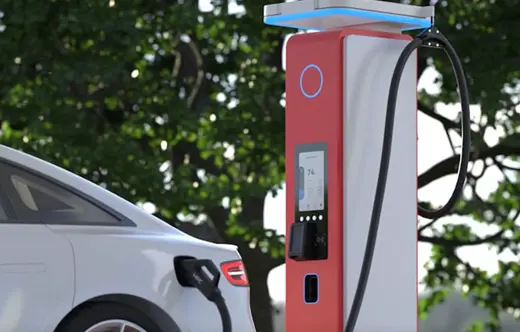
EVSE stands for Electric Vehicle Supply Equipment. If you have ever shopped for a home wallbox, planned a workplace charging project, or researched electric vehicle infrastructure, you have almost certainly seen this acronym — often in places where people simply write “EV charger” or “charging station.”
Understanding what EVSE really means matters more than it sounds. It changes how you evaluate equipment, how you plan installations, and how you avoid buying the wrong product for your EV, your building and your budget. This guide explains the EVSE meaning, how an EVSE charging station works, the difference between AC and DC systems, and the standards that separate quality equipment from the rest.
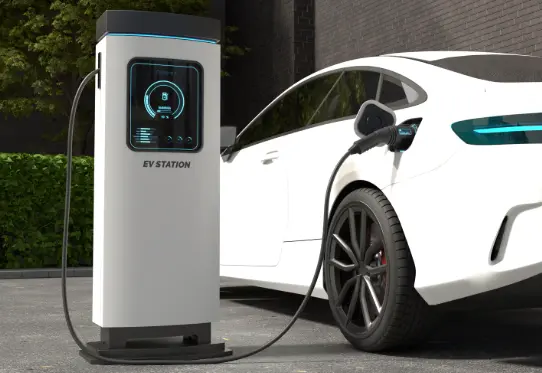
EVSE Meaning: Electric Vehicle Supply Equipment
Electric Vehicle Supply Equipment (EVSE) is the official term for the equipment that safely delivers electrical energy from the building’s power supply to an electric vehicle. In the United States, the National Electrical Code (NEC) defines EVSE in Article 625 as the equipment and accessories — including the charging unit, wiring, disconnecting means and connectors — needed to transfer power from the premises wiring to the electric vehicle.
In everyday language, the same equipment is called many things: EV charging station, charge point, wallbox, charging pile or EV charger. The term “charging pile” is common in China and many export markets, while “charging station” and “wallbox” dominate in North America and Europe. Whatever the name, the job is the same: to connect the vehicle safely to the grid, manage the flow of electricity, and protect people, property and the vehicle itself.
The Key Difference: EVSE Is Not the Charger
This is the most common misunderstanding in the industry. For AC charging, the EVSE is not the charger — the actual charger lives inside the vehicle.
Here is how it works. An electric car contains an onboard charger, a device that converts alternating current (AC) from the building supply into direct current (DC) to charge the battery. A home or workplace AC charging station is essentially a smart, protected power outlet: it supplies AC power to the vehicle, communicates with it through a control signal, and stops or starts the flow safely. The conversion to DC happens inside the car.
DC fast charging is different. In a DC charging system, the EVSE contains the high-power charger itself, converting AC to DC and feeding the DC power directly to the battery, bypassing the onboard charger. This is why DC stations charge much faster — and why they are far more expensive and require much more electrical infrastructure.
When you plug an EV into an EVSE charging station, a short sequence runs automatically:
- Connection and handshake. The connector locks onto the vehicle, and the EVSE and vehicle exchange a control pilot signal (defined by standards such as SAE J1772) to confirm that the connection is safe and the vehicle is ready to accept power.
- Energizing. The EVSE closes its contactor and begins delivering power at the negotiated level.
- Monitoring. The system continuously monitors current, voltage, temperature and ground integrity, and shuts down instantly if anything is abnormal.
- Completion. When the battery reaches the target state of charge, or the user stops the session, the EVSE de-energizes the circuit and unlocks the connector.
Modern networked stations add a fifth step: communicating with a backend platform using open protocols such as OCPP, which enables billing, remote management, load control and smartphone apps.
Charging power is usually described in three levels:
- Level 1 — standard 120 V AC outlets, typically 1.2–1.9 kW; suitable for overnight residential charging.
- Level 2 — 208/240 V AC, from about 3.7 kW to 19.2 kW; the most common class for homes, workplaces and public parking, with typical units rated at 7 kW, 11 kW or 22 kW.
- DC fast charging — high-power DC stations from roughly 50 kW to 350 kW, used for public charging hubs and highway corridors.
Types of EVSE Charging Stations
EVSE charging stations come in several forms, each designed for a different duty:
- Residential wallboxes — compact AC units (typically 7–22 kW) mounted in garages or on exterior walls for home charging.
- Commercial and public stations — AC pedestals and wall units for parking lots, shopping centers and workplaces, often networked for payment and management.
- DC fast charging stations — standalone DC chargers or grouped systems, such as a high-power rectifier cabinet feeding multiple DC charging terminals, used at service stations and fleet depots.
- Fleet charging systems — coordinated multi-point installations with load management to charge many vehicles overnight or between shifts.
Connectors also vary by region: Type 1 (SAE J1772) and CCS are common in North America, Type 2 and CCS in Europe, CHAdeMO in Japan, GB/T in China, and NACS is increasingly adopted across North America. Buyers should always match the station and connector to the vehicles and region they serve.
Standards and Certifications That Matter
A quality EVSE charging station is defined by the standards it meets:
- NEC Article 625 — the US National Electrical Code requirements for installing electric vehicle supply equipment, covering wiring, protection, disconnecting means and marking.
- SAE J1772 — the North American standard for the conductive charge coupler and control pilot communication between the vehicle and the EVSE.
- UL safety standards — independent safety certification for EV charging equipment in North America.
- IEC 61851 series — the international standards for electric vehicle conductive charging systems: Part 1 covers general requirements, Part 23 covers DC charging stations, and Part 24 covers digital communication for DC charging.
- National quality certification and ISO management systems — the manufacturer-level certifications that indicate consistent design, production and quality-control processes.
These standards exist for a reason. Charging equipment carries high currents, operates outdoors in rain and heat, and sits in public spaces. Certified equipment protects users from electric shock and fire, satisfies permitting authorities and insurers, and provides the documentation needed for grid connection and subsidy programs.
What to Look for in an EVSE Charging Station Supplier
When evaluating a supplier for your EV charging project, check more than the price per unit:
- Product range. Can they supply AC units, DC fast charging and supporting electrical equipment from one source?
- Certifications. Do their products carry national quality certification, IEC certification and ISO management-system certification?
- Power ratings and configuration. Are the power levels (7 kW, 22 kW, high-power DC) matched to your vehicles and use case?
- Network and management capability. Does the equipment support open protocols such as OCPP and app-based management?
- Engineering and installation support. Can the supplier deliver design, manufacturing, installation and operation-and-maintenance services as a complete package?
- Proven track record. Have their products been used in real grid, rail, mining and international projects?
Dingsheng: EV Charging Equipment from a Certified Manufacturer
Shandong Dingsheng Electrical Equipment Co., Ltd. is a national high-tech enterprise and a national-level “Little Giant” enterprise specializing in the R&D and production of high and low voltage switchgear, EV charging piles and energy storage equipment. The company operates a 20,000-square-meter factory with a staff of 220, and its product line includes 7 kW and 22 kW AC charging piles, high-power DC charging solutions such as 360/480 kW group charging rectifier cabinets, and energy storage systems — a full range that supports complete charging projects from a single supplier.
Dingsheng’s technical strength is documented rather than claimed: 16 invention patents, 38 utility model patents and 12 software copyrights, supported by nine provincial and municipal R&D platforms. All products have passed national quality certification, IEC international standard certification and ISO management-system certification, and the company holds Grade II Qualification for General Contracting of Electric Power Engineering Construction. Its solutions have been used in projects such as State Grid, the Beijing–Shanghai High-speed Railway and aid-Africa construction, with exports to Southeast Asia, Africa and other regions, and the company provides a full-chain service covering project design, manufacturing, integrated installation and technical operation and maintenance.
Conclusion
EVSE stands for Electric Vehicle Supply Equipment — the smart, safe equipment that connects an electric vehicle to the electricity supply. Whether you call it a charging station, a wallbox or a charging pile, choosing the right EVSE charging station comes down to power level, connector compatibility, standards compliance and the credibility of the manufacturer behind it.
If you are planning a home, commercial or fleet EV charging project and need certified charging piles, DC fast charging systems or the supporting electrical equipment, our team can help. Contact Dingsheng Electric to discuss your requirements —
contact us for product selection and project consultation.
Frequently Asked Questions
What does EVSE stand for?
EVSE stands for Electric Vehicle Supply Equipment — the equipment that safely transfers electricity from the building’s power supply to an electric vehicle.
Is an EVSE the same as a charging station?
Yes. “EV charging station”, “charge point”, “wallbox” and “charging pile” are all common names for the same category of equipment officially called EVSE.
Is the EVSE the charger?
For AC charging, no — the actual AC-to-DC charger is built into the vehicle, and the EVSE delivers safe AC power to it. In DC fast charging, the high-power charger is built into the charging station itself.
What is the difference between AC and DC EVSE?
AC EVSE supplies alternating current to the vehicle’s onboard charger, and is typical for home and workplace charging at 7–22 kW. DC EVSE contains its own high-power charger and feeds DC directly to the battery, enabling much faster charging at 50 kW and above.
What standards should EVSE meet?
Key references include NEC Article 625 and SAE J1772 in North America, UL safety certification, and the IEC 61851 series internationally, together with national quality certification and ISO management-system certification from the manufacturer.