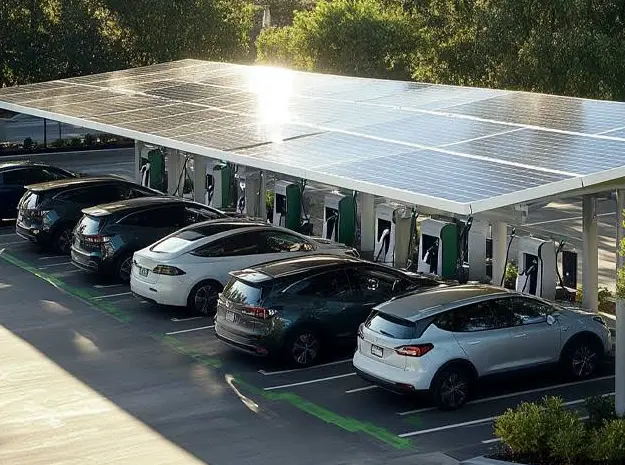
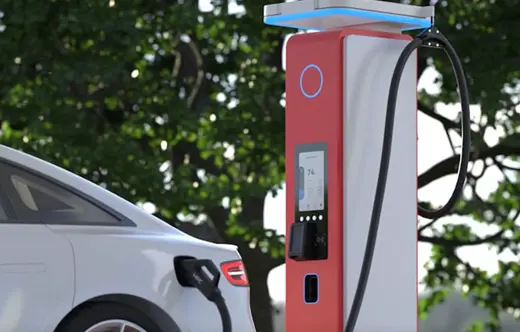
Installing an EV charger involves more than mounting the charging unit and connecting a cable. A successful installation must consider available electrical capacity, charger power, wiring, protective devices, installation location, vehicle compatibility, permits and future charging demand.
For a home, the main question is usually whether the existing electrical panel can support a 7kW or similar AC charger. For a commercial site, the project may require three-phase power, load management, upgraded switchgear, network connectivity, parking design and utility coordination.
This guide explains the most important EV charger installation requirements for residential properties, workplaces, apartment buildings, hotels, shopping centers, fleet depots and public charging sites.
You can also explore Dingsheng Electric’s complete range of EV charging station products for different power and application requirements.
The Short Answer
Before installing an EV charger, the property owner should confirm five conditions:
- The site has enough electrical capacity.
- The supply voltage and phase match the charger.
- The circuit includes suitable protection and grounding.
- The charger is installed in a safe and accessible location.
- The work complies with local electrical, building and accessibility regulations.
EV charging circuits are covered by specific electrical installation and equipment standards. IEC 60364-7-722 applies to circuits intended to supply electric vehicles, while IEC 61851-1 covers characteristics, operating conditions, connections and electrical safety requirements for EV supply equipment. Local requirements may differ, so the final design should always be completed or approved by a qualified electrical professional.
The EV Charger Installation Readiness Map
A practical installation project can be divided into six stages:
Stage 1: Define the Charging Demand
Start by identifying how the charger will be used.
Important questions include:
- How many electric vehicles will use the site?
- How many kilometers or miles does each vehicle travel per day?
- How long will each vehicle remain parked?
- Is overnight charging available?
- Will chargers be private, shared or open to the public?
- Is fast vehicle turnover important?
- Will more chargers be added in the future?
A home with one electric vehicle may only require one AC charger. A workplace or hotel may need several AC chargers, while a fleet depot or highway charging site may require higher-power DC charging equipment.
Charger power should therefore be selected according to dwell time and energy demand, rather than simply choosing the highest available output.
Stage 2: Check the Available Electrical Capacity
An electrical load assessment is one of the most important EV charger installation requirements.
The electrician or project engineer should review:
- Main service rating
- Existing peak demand
- Distribution panel capacity
- Spare breaker positions
- Supply voltage
- Single-phase or three-phase availability
- Transformer capacity
- Cable route and distance
- Planned future electrical loads
For residential properties, this assessment determines whether the existing consumer unit or distribution board can support an additional EV charging circuit.
For commercial projects, the assessment should include both the present charging load and the expected number of future charging points. Utility involvement may be necessary when a project requires a new service connection, transformer upgrade or higher contracted capacity. The U.S. Department of Energy similarly recommends site-level utility evaluations to understand available power and any upgrades required for the planned charging capacity. (afdc.energy.gov)
Planning a new charging project?
Send the site voltage, available capacity, number of charging points and vehicle types through the Dingsheng Electric inquiry form to discuss a suitable charger configuration.
Stage 3: Match the Charger to the Power Supply
The charger must be compatible with the site’s voltage, phase configuration and available current.
Residential installation
A 7kW AC EV charger is suitable for many residential and long-dwell parking applications.
The Dingsheng 7kW AC charging unit uses an AC 220V single-phase supply and has a rated current of 32A. It can be wall-mounted or column-mounted, making it suitable for garages, driveways, residential communities and private parking spaces. The product also includes functions such as overvoltage, undervoltage, overcurrent, short-circuit, overtemperature and leakage-current protection. (dingshengelectric.com)
Before selecting a 7kW charger, confirm that the building can continuously support the required circuit load without overloading the main service.
Commercial installation
A 22kW AC EV charger is generally better suited to sites with three-phase electrical service and shorter parking durations.
Typical applications include:
- Office buildings
- Hotels
- Shopping centers
- Apartment parking facilities
- Car dealerships
- Municipal parking areas
- Fleet depots
However, installing a 22kW charger does not guarantee that every electric vehicle will receive 22kW. The actual AC charging rate is limited by the vehicle’s onboard charger, as well as the charger output and available site power.
When three-phase power is unavailable or vehicles remain parked overnight, a lower-power AC charger may provide a more economical solution.
Stage 4: Design the Dedicated Charging Circuit
An EV charger should normally be supplied through a properly designed charging circuit.
The design may include:
- Appropriately rated circuit breaker
- Suitable cable size
- Residual-current or ground-fault protection
- Protective earthing or grounding
- Overcurrent and short-circuit protection
- Surge protection where required
- Local isolation device
- Emergency stop for certain commercial installations
- Clearly identified distribution-board circuit
Cable size must be calculated according to current, installation method, ambient temperature, cable length, grouping conditions and allowable voltage drop.
Using an undersized cable can cause excessive voltage drop, overheating, reduced charging performance and long-term reliability problems. The correct cable should not be selected only from the charger’s nominal power rating.
All protective-device ratings and grounding arrangements must follow the electrical code applicable in the installation country.
Home EV Charger Installation Requirements
A residential installation is usually smaller than a commercial project, but it still requires professional planning.
1. Suitable Parking Location
The charger should be positioned close enough to the vehicle’s charging inlet so that the cable can reach without being stretched.
The cable should not:
- Cross a public walkway
- Create a trip hazard
- Be crushed by the vehicle
- Rest in standing water
- Block a door or emergency route
- Require frequent use of extension cables
For outdoor installations, the charger enclosure should be suitable for the expected rain, dust, temperature and humidity conditions.
2. Dedicated Electrical Supply
A permanently installed home charger should use a circuit designed for the charger load. Sharing the circuit with other high-power appliances may result in nuisance tripping or overloading.
The installer should check whether appliances such as electric heating, air conditioning, water heaters or induction cookers already place significant demand on the property’s electrical service.
3. Panel and Service Capacity
If the existing electrical panel has insufficient capacity, possible solutions include:
- Upgrading the distribution panel
- Increasing the main service capacity
- Installing dynamic load management
- Selecting a lower charging power
- Scheduling charging during off-peak periods
Dynamic load management can reduce charger output when total household consumption approaches the main service limit.
4. Wi-Fi or Communication Signal
Smart EV chargers may require Wi-Fi, Ethernet or cellular communication for:
- Remote monitoring
- Charging schedules
- User authorization
- Energy consumption records
- Fault notifications
- Software updates
The communication signal should be tested at the installation point before the charger is commissioned.
5. Permit and Inspection
Depending on the location, a home charger installation may require an electrical permit, installation plan or final inspection. Charging equipment should comply with applicable local and national regulations and is generally installed by a licensed electrical contractor. (afdc.energy.gov)
Commercial EV Charger Installation Requirements
Commercial charging projects require a broader evaluation because multiple chargers may operate at the same time.
Start With the Total Connected Load
The theoretical connected load can be estimated using:
Number of chargers × charger rated power = total connected charging load
For example:
- 10 × 7kW chargers = 70kW
- 10 × 22kW chargers = 220kW
- 4 × 60kW DC chargers = 240kW
The maximum connected load does not always equal the actual simultaneous demand. Smart load management can distribute available power among vehicles according to charging priority, battery status, departure time or site demand.
However, load management should be part of the original system design. It should not be used to hide an electrical supply that is fundamentally unsuitable for the planned project.
Evaluate the Distribution System
A commercial project may require:
- New low-voltage distribution cabinet
- Upgraded switchgear
- New transformer or substation
- Separate EV charging distribution board
- Metering equipment
- Power-quality assessment
- Energy-management system
- Backup power or energy storage integration
For larger sites, Dingsheng Electric’s MNS low-voltage switchgear assembly can support low-voltage distribution requirements, while the XL power distribution cabinet may be considered for applicable power-distribution arrangements.
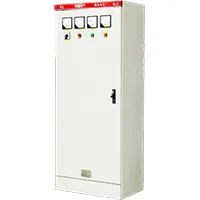
Projects requiring a dedicated transformation and distribution solution may also evaluate the YBM high-voltage/low-voltage prefabricated substation.
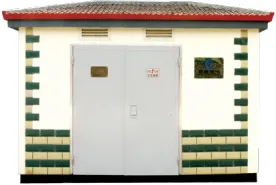
The final equipment configuration must be determined from the site single-line diagram, voltage level, fault-current calculation, load study and local electrical standards.
Plan the Parking Layout
Commercial EV charger installation is also a civil and traffic-design project.
The layout should consider:
- Vehicle entry and exit direction
- Charging-port locations on different vehicles
- Cable reach
- Wheel stops and protective bollards
- Pedestrian routes
- Drainage
- Lighting
- Signage
- Accessible charging spaces
- Maintenance clearance
- Snow, flooding or extreme-weather exposure
Accessible charging spaces should provide sufficient room for users to enter and exit vehicles, move around the charging equipment and reach the vehicle connection point safely. Public and shared charging sites may also need accessible payment interfaces and appropriate signage. (afdc.energy.gov)
Provide Network and Payment Infrastructure
Public and semi-public chargers may require:
- Ethernet, Wi-Fi or cellular connectivity
- RFID authorization
- Mobile application access
- Payment terminal integration
- OCPP or another backend protocol
- Remote fault diagnosis
- Energy metering
- User billing
- Charger-status monitoring
Communication cables, routers, SIM cards and backend-system requirements should be included in the project scope before civil construction begins.
Protect the Equipment
Chargers installed in public parking areas may be exposed to accidental vehicle impact, vandalism, rain, dust and intensive daily use.
The project may therefore require:
- Protective bollards
- Raised equipment islands
- Weather-resistant enclosures
- Cable-management systems
- Security cameras
- Adequate lighting
- Emergency isolation
- Clear operating instructions
Protective equipment should not obstruct the user interface, charging connector or required maintenance space.
When Does a Site Need DC Fast Charging?
AC chargers are suitable when vehicles remain parked for several hours. DC fast charging is more appropriate when drivers need to recover significant range during a short stop.
Possible DC charging applications include:
- Public charging stations
- Highway service areas
- Taxi and ride-hailing operations
- Logistics fleets
- Bus and truck depots
- Delivery centers
- Car dealerships
- High-turnover commercial parking
Dingsheng Electric offers several DC charging options:
DC charger installation normally requires substantially more power than a home or workplace AC charger. The site may need a transformer upgrade, new switchgear, dedicated distribution equipment, utility approval and additional civil works.
Before specifying a DC charger, the project owner should confirm vehicle charging curves, expected daily sessions, required turnaround time and available grid capacity.
Documents Needed Before Installation
A well-prepared project should have a clear technical documentation package.
Depending on project size, this may include:
- Site layout drawing
- Electrical single-line diagram
- Charger location plan
- Load calculation
- Cable-sizing calculation
- Short-circuit and protection study
- Earthing or grounding design
- Communication network diagram
- Civil foundation drawing
- Equipment datasheets
- Permit documents
- Inspection and commissioning records
For commercial projects, these documents help equipment suppliers, utilities, contractors and site owners work from the same technical requirements.
Commissioning Checklist
Installation is not complete until the system has been tested.
The commissioning process should verify:
- Supply voltage and phase sequence
- Protective earth continuity
- Insulation resistance
- Protective-device operation
- Residual-current or ground-fault protection
- Charger startup
- Vehicle communication
- Connector locking
- Emergency stop operation
- RFID, application or payment functions
- Network connection
- Energy metering
- Load-management response
- Charging under normal operating load
- Fault reporting and remote monitoring
The site owner should receive operating instructions, test records, warranty details, software credentials and an emergency contact procedure.
Common EV Charger Installation Mistakes
Selecting the Charger Before Checking Site Power
Choosing a 22kW or DC charger before confirming electrical capacity can lead to expensive redesigns or utility upgrades.
Ignoring Future Expansion
Installing only enough cable and distribution capacity for the first charger can make later expansion more disruptive and expensive.
Where possible, the project should reserve:
- Spare electrical capacity
- Additional conduits
- Distribution-board space
- Network capacity
- Parking locations
- Space for future transformers or energy storage
Choosing Charger Power Based Only on the Maximum Rating
Higher power is not always better. If vehicles remain parked for eight hours, several managed AC chargers may serve the site more efficiently than one high-power charger.
Using the Wrong Connector or Charging Standard
The connector must match the vehicles operating in the target market. Vehicle fleet information should be confirmed before ordering charging equipment.
Overlooking Communication Coverage
A charger may power on correctly but still fail to provide payment, monitoring or remote-management functions if cellular or network coverage is poor.
Treating Civil Works as an Afterthought
Trenching, foundations, drainage, bollards and reinstatement can represent a significant part of commercial installation cost. These items should be included in the early site survey.
What Information Should You Send When Requesting a Quotation?
To receive a more accurate EV charger recommendation, prepare the following information:
- Installation country
- Site type
- Available input voltage
- Single-phase or three-phase supply
- Available electrical capacity
- Number of charging points
- Vehicle types
- Required connector standard
- Desired charging time
- Indoor or outdoor installation
- Wall-mounted or floor-mounted requirement
- Network and payment requirements
- Cable length
- Project quantity
- Expected installation date
- Expansion plan
You can send these details through the Dingsheng Electric contact and inquiry page.
Frequently Asked Questions
Does a home EV charger need a dedicated circuit?
In most permanent home-charging installations, the charger should be supplied by a properly rated circuit designed for the EV charging load. The final circuit and protection design must follow local electrical regulations.
Can I install an EV charger without upgrading the electrical panel?
Yes, if the existing panel and main service have enough available capacity. If capacity is limited, the electrician may recommend a panel upgrade, lower charger output or dynamic load management.
Does a 22kW EV charger require three-phase power?
A 22kW AC charger generally requires a compatible three-phase supply. The building supply, charger specification and vehicle onboard-charger capacity should all be confirmed before installation.
How much electrical capacity does a commercial charging site need?
The required capacity depends on charger power, charger quantity, simultaneous usage, dwell time and load-management strategy. A professional load study should be completed before equipment is ordered.
Can several EV chargers share the same power capacity?
Yes. A smart load-management system can distribute available capacity among multiple chargers. The system must still be designed around the site’s electrical limits and expected charging demand.
Are outdoor EV chargers safe in the rain?
Outdoor chargers should have an enclosure and installation method suitable for the environmental conditions. Correct drainage, cable management, protective devices and professional installation are also necessary.
Who should install an EV charging station?
The installation should be completed by qualified electrical professionals familiar with EV charging equipment, applicable electrical codes, permitting requirements and commissioning procedures.
What is the most important commercial installation requirement?
Available electrical capacity is usually the first requirement to verify. Without a confirmed power supply and distribution plan, charger quantity, output and construction cost cannot be estimated reliably.
Final Recommendation
EV charger installation requirements vary significantly between a private home and a commercial charging site.
A home project usually focuses on panel capacity, a dedicated circuit, safe charger positioning and overnight charging demand. A commercial project must additionally consider simultaneous load, utility capacity, distribution equipment, accessibility, networking, payment systems, traffic flow and future expansion.
The most reliable process is to complete the site assessment first, calculate the charging demand and then select the charger.
For residential and long-dwell charging, consider the 7kW AC EV charger. For workplaces, hotels, apartment buildings and commercial parking, review the 22kW AC EV charger. Higher-turnover sites can explore Dingsheng Electric’s complete range of AC and DC EV charging stations.
Need help selecting charging equipment for your project?
Contact Dingsheng Electric for an EV charging solution and quotation.