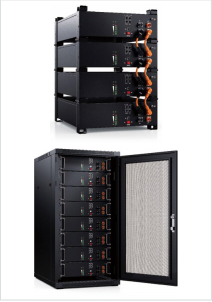
Direct Answer: Buyers should define the DC fast charging station acceptance matrix before FAT is booked. FAT should verify the contracted charger configuration and factory-test evidence; SAT should verify site power, protection, earthing, emergency interfaces, communications and installation conditions; commissioning should prove agreed vehicle, connector, load-sharing and backend scenarios. Final handover should occur only after defects, retests, as-built records, training and warranty-start conditions are closed.
This is a procurement and project-acceptance issue for charging operators, fleet depots, EPC contractors, electrical integrators, property owners, utilities, distributors, and OEM buyers. A charger that powers on and charges one vehicle is not automatically a fully accepted charging-station project. Acceptance should prove the contracted equipment, the site interfaces, the communication path, the operating scenarios, the evidence record, and the handover boundary.
Dingsheng supplies charging-station equipment, including 160KW DC charging pile, 120KW DC charging pile, and group charging rectifier cabinet products. The acceptance plan should be tied to the exact ordered configuration and project specification rather than a generic commissioning checklist.

Why Must the Acceptance Matrix Be Frozen Before FAT Dates Are Booked?
The acceptance matrix defines what will be tested, where it will be tested, who will witness it, what evidence will be recorded, and what result allows the project to move to the next stage. Without that matrix, FAT can become a factory demonstration while the buyer assumes it is final proof of system readiness.
The matrix should separate factory-verifiable charger configuration and workmanship, site-dependent electrical and installation interfaces, vehicle/connector/load-sharing scenarios, and backend/network/payment/metering functions where included in the project scope.
Industry experience point: FAT disputes often happen because one party expects a functional demonstration while the other expects a contractual acceptance test. The difference should be resolved before the test date, not during it.
| Acceptance Stage | Primary Purpose | Typical Owner / Witness | Evidence Expected |
| FAT | Verify contracted charger configuration and factory-test scope | Supplier with buyer/EPC witness as contracted | Approved procedure, configuration records, test sheets, deviations and punch list |
| SAT | Verify installed charger interfaces with the real site | Supplier/EPC/site electrical team according to contract | Site test records, power/protection/earthing checks, interface results and defects |
| Commissioning | Demonstrate agreed operating scenarios | Project team with operations/backend parties where required | Vehicle/connector/session records, communication logs, load-sharing evidence and open issues |
| Handover | Transfer a documented, accepted system to operations | Buyer / operator | As-builts, manuals, training, baseline records, spares, warranty and defect closure |
What Should FAT Prove About the Charger Package?
FAT should prove what can reasonably be verified at the factory before the charger is shipped. The exact procedure must follow the contract, product configuration and project specification; there is no universal pass list that applies to every charging project.
Buyer checkpoints can include equipment identification and ordered configuration, charger quantity and connector configuration, internal assembly and wiring inspection according to the agreed procedure, protection and control devices included in the supply scope, local HMI/display functions required by the order, factory-demonstrable emergency functions, communication hardware/software configuration included in scope, test records, configuration version records where relevant, and open deviations.
The buyer should also confirm which tests are simulated at the factory and which must be repeated with the real site power, network, vehicle or backend during SAT and commissioning.
Which Tests Must Wait Until Site Acceptance Testing?
SAT should verify the installed station against the real upstream power, earthing system, cable interfaces, site emergency circuits, communications and physical installation. A factory cannot fully prove conditions that only exist after installation.
The buyer should define the boundary between charger supply and site works. Upstream switchgear, transformer, distribution cable, civil works, grounding network, network connectivity or protective devices may belong to the EPC or site contractor rather than the charger supplier.
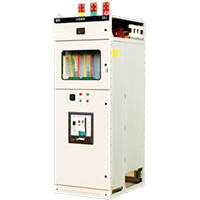
Dingsheng’s electrical catalog includes MNS low-voltage switchgear assembly, but the presence of a switchgear product in the catalog does not mean it is automatically included in every charging-station project. The RFQ and acceptance matrix should state the actual upstream distribution boundary.
| Site Interface | What SAT Should Confirm | Common Acceptance Gap |
| Incoming supply | Installed supply matches the approved project input and charger interface | Charger is energized without reconciling the final site supply data. |
| Protection | Required upstream and charger-side protection interfaces are installed and documented | Responsibility between charger supplier and EPC is unclear. |
| Earthing | Project earthing interfaces are completed and test evidence is available | Factory records are mistaken for site earthing acceptance. |
| Emergency stop | Site and charger emergency functions interact as specified | Only the local charger stop is tested. |
| Network / backend | Required communication path is available and ownership is defined | Charger communicates locally but remote platform acceptance is not demonstrated. |
| Installation | Cable termination, mounting, labeling, ventilation/clearance and workmanship meet the project basis | Functional charging is used to overlook installation defects. |
How Should Buyers Test Vehicle and Connector Scenarios?
A project with several charger types, connector outlets, vehicle classes, or user groups should not rely on one successful session as the only operating test. The buyer should define representative scenarios before commissioning.
Depending on the project scope, scenarios may include individual connector operation, both connectors in use where supported by the ordered unit, repeated start/stop sessions, different approved test vehicles or adapters, interrupted sessions, restart behavior, user authorization, metering/payment functions if contracted, and fault or emergency-stop recovery.
Industry experience point: A commissioning plan that tests only the easiest vehicle can miss connector, communication or power-allocation issues that appear when a different vehicle or simultaneous session is introduced.
How Should Load-Sharing or Group Charging Be Accepted?

Where the project uses a group charging architecture, the acceptance plan should verify the functions specifically contracted for that architecture. Dingsheng lists a 360KW/480KW Group Charging Rectifier Cabinet in its current product range. The exact power-allocation logic, terminal configuration and control method must still be confirmed from the specific order and project design.
The buyer should define test cases such as one active charging point, multiple simultaneous sessions where the configuration supports them, changing demand between vehicles, loss and restoration of a charging point, and the expected behavior of the group-control system.
Industry experience point: Load sharing should be accepted as a behavior defined by the contracted configuration, not by a generic assumption that every multi-output charger manages power in the same way.
Who Owns OCPP, Backend, Network and Payment Acceptance?
Backend integration is frequently split among several parties: charger manufacturer, software platform provider, network operator, payment provider, EPC, site IT team, and charging operator. The acceptance matrix should assign responsibility for each interface.
If OCPP or another protocol is required by the project, the buyer should specify the required version or profile and test scope in the contract. No protocol compliance should be assumed unless it is verified for the ordered configuration.
Evidence should record charger identity, backend endpoint or test environment, communication status, session logs, error messages, remote functions required by the project, and responsibility for unresolved issues.
Industry experience point: “Connected to the backend” and “backend acceptance complete” are not the same statement. A stable connection may still leave remote commands, transaction records, alarms or payment interfaces untested.
Scenario: A Fleet Depot Accepts Power-On but Not the Whole Project
Representative scenario — not a claimed Dingsheng customer case.
Business Background: A fleet depot installs several dual-connector DC chargers with upstream distribution and a remote charging-management platform.
Problem: During commissioning, one vehicle successfully charges from one connector. The project team prepares to sign acceptance, but the second connector, emergency-stop chain, remote platform, load-sharing behavior, defect list and as-built documentation have not been closed.
Cause: The purchase contract defined charger supply but did not define a staged FAT/SAT/commissioning acceptance matrix or evidence register.
Solution: The buyer creates a responsibility matrix separating charger factory tests, site electrical checks, connector/vehicle scenarios, backend functions, punch-list closure, documentation and training. Open items are assigned owners and retest dates before final handover.
Buyer Decision Value: The operator avoids starting warranty and commercial operation on a system that has demonstrated only one successful charging session rather than the full contracted scope.
How Should Defects, Retests and Hold Points Be Managed?
Every FAT and SAT should produce an evidence register and a punch list. Each issue should record its source test, description, responsible party, corrective action, retest method, status and closure approval.
| Punch-List Field | Why It Matters | Buyer Acceptance Question |
| Test reference | Links the defect to a controlled procedure | Which test revealed the issue? |
| Defect description | Prevents vague notes such as “communication problem” | What exactly failed or deviated? |
| Owner | Separates charger, EPC, backend and site responsibilities | Who is responsible for correction? |
| Corrective action | Records what changed | Was the fix temporary or permanent? |
| Retest evidence | Proves the issue was rechecked | Is there a signed record, log or result? |
| Hold / release status | Controls shipment, energization or final handover | Can the project proceed with this item open? |
Industry experience point: A punch list without a retest field is often only a defect list. Acceptance needs evidence that the corrected condition was actually verified.
What Must Be in the Handover Pack?
Final handover should include the documents required to operate, maintain and support the charging station after the commissioning team leaves. The exact dossier depends on the contract, but buyers should typically consider approved/as-built drawings, configuration records, FAT and SAT reports, commissioning logs, punch-list closure, operating and maintenance manuals, parts information, training records, software/firmware baseline where relevant, network/backend responsibility, warranty start date, warranty claim route, and agreed spare-parts scope.
The buyer should also define which logs or baseline configuration records must be saved at handover. Without a known baseline, later troubleshooting becomes a comparison against memory rather than evidence.
What Should Buyers Put in the DC Fast Charging Station Acceptance RFQ?
Provide charger quantity and ordered rating, connector mix, upstream supply and distribution boundary, FAT witness scope, applicable project specification, SAT/site interface scope, available test vehicles or adapters, load-sharing scenarios, backend/network ownership, metering/payment scope if applicable, emergency-stop/earthing/protection interfaces, required acceptance records, training, spare-parts scope, warranty-start rule and defect-closure process.
For pre-installation context, buyers can also review Dingsheng’s existing guide on EV charger installation requirements. That article addresses power and installation planning; the FAT/SAT process here begins at the acceptance stage and should not be replaced by a pre-installation checklist.
Frequently Asked Questions
Is successful vehicle charging enough to accept a DC fast charging station?
No. A successful session proves only part of the system. Acceptance should also cover the contracted charger configuration, site electrical interfaces, protection/earthing/emergency functions, required connector scenarios, communications/backend scope, defect closure and handover documents.
What is the difference between FAT and SAT?
FAT verifies the agreed factory-test scope before shipment. SAT verifies the installed equipment and real site interfaces after installation. The exact split should be defined in the project acceptance matrix.
Should every FAT include a real vehicle?
Not necessarily. Some functions may be simulated or tested with factory equipment. The buyer should define which scenarios require a real vehicle, test adapter, or final-site confirmation during SAT/commissioning.
Who should test the upstream switchgear and protection?
The contract should assign responsibility. The charger supplier, switchgear supplier, EPC and site electrical team may own different parts of the interface. The acceptance matrix should show who tests and signs each item.
How should OCPP or backend communication be accepted?
Only against the project-required protocol/version and agreed scenarios. Record connection, charger identity, session logs, required remote functions, alarms and unresolved issues. Do not assume protocol compliance without product-specific evidence.
When should the warranty start?
The warranty-start rule should be stated in the contract. Buyers should avoid leaving it ambiguous between factory shipment, site energization, provisional acceptance and final handover.
What should buyers send Dingsheng before defining FAT/SAT?
Send the ordered charger configuration, connector mix, upstream electrical boundary, project specification, witness requirements, site interface scope, test vehicles, backend/network ownership, load-sharing scenarios, acceptance records, training, spares and warranty requirements.
Request a FAT/SAT and Commissioning Scope Review
Before booking FAT or site commissioning, send Dingsheng the ordered charger configuration, connector mix, upstream electrical boundary, FAT witness scope, site interface conditions, project test requirements, vehicle scenarios, backend/network ownership, load-sharing requirements, defect-closure rules, handover documents and warranty-start conditions through the Contact Us page. Dingsheng can review the available charging-station equipment and identify which acceptance items belong at the factory, at site, or in the final commissioning handover.