Direct Answer: A 160kW DC charging pile fits a project only when the site supply, vehicle charging curves, connector mix, simultaneous-session plan, software integration and operating environment support that configuration. Buyers should verify how a dual-gun charger allocates power, what vehicles can actually accept, and which installation and acceptance items are included before comparing quotations.
A charger rating is a system limit, not a promise that every connected vehicle will receive that power continuously. Vehicle battery voltage, state of charge, temperature and onboard battery-management limits affect the charging curve. The utility connection, transformer, upstream switchgear and the number of chargers operating together determine whether the site can supply the requested load.
A useful review of DC fast charging stations for electric vehicles therefore starts with the operating plan, not the product name. Buyers exploring Dingsheng’s commercial charging station range should first convert expected traffic, vehicle types and electrical constraints into a configuration brief that a supplier can verify.
What Does the 160kW Rating Tell the Buyer?
The 160kW rating identifies the charger’s maximum output class under defined conditions. It does not answer how output changes across voltage, whether power is shared between two connectors, how long the vehicle remains near peak acceptance, or how the charger behaves when site load management reduces its allocation.
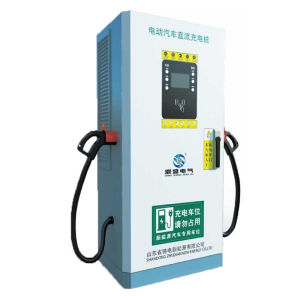
The published 160kW dual-gun DC charging pile is identified as a dual-gun product. That makes power-allocation logic a central RFQ item. Buyers should ask whether 160kW is available to one connector when the second is idle, how power is divided during two sessions, whether allocation is fixed or dynamic, and which minimum module step or control rule applies. Those details should be confirmed from the offered configuration rather than inferred from the phrase “dual guns.”
A frequent procurement error is multiplying 160kW by an assumed charging time to predict energy sales. The real throughput depends on vehicle arrival patterns and charging curves. A charger can spend much of a session below its nameplate rating when the vehicle tapers power at higher state of charge.
How Should Grid Capacity Shape the Configuration?
The site electrical study should identify available service capacity, transformer rating, short-circuit level, voltage and phase, upstream protection, cable route, earthing arrangement and spare capacity after other site loads are included. Where several chargers share one connection, the design also needs a coincident-demand assumption and a load-management strategy.
A project with limited grid capacity may still use a 160kW charger if the control system caps demand or schedules sessions, but the charger will not always operate at full output. The commercial decision is whether the higher-power hardware provides useful flexibility as the site grows or only adds cost that the current connection cannot use.
Demand charges and time-of-use tariffs can materially affect operating cost. DC fast charging is more likely than lower-power charging to create a high demand peak. Buyers should obtain the local tariff structure and decide whether static limits, dynamic site load balancing or energy storage will be part of the scope.
Which Vehicle Data Should Be Collected Before Selection?
Prepare a vehicle matrix rather than naming only one current model. Record connector type, battery voltage window, maximum accepted DC power, typical arrival state of charge, desired departure state of charge, dwell time and expected sessions per day. For fleets, add the route schedule and the number of vehicles that may arrive together.
Connector compliance and charging communication must match the target market and vehicle fleet. IEC 61851-23 covers requirements for DC EV supply equipment, while IEC 61851-24 addresses digital communication between the DC equipment and vehicle for charging control. The project should identify the applicable edition, regional connector system and any local approval requirements. A supplier should provide product-specific evidence rather than a generic standards list.
Another common mistake is selecting the charger around the vehicle with the highest advertised peak. If most vehicles accept substantially less power, a lower-power unit or a different port mix may deliver similar daily throughput with a lower electrical-service burden. The 120kW floor-standing DC charging pile can be included as a comparison route when the vehicle mix or grid limit does not justify 160kW.
When Does a Dual-Gun Configuration Add Real Value?
Two connectors can reduce idle time and give operators more flexibility, but two cables do not automatically double site capacity. A dual-gun design adds value when the expected queue, parking layout and power-sharing logic let two vehicles use the asset efficiently. It adds less value when only one bay is accessible, the cable cannot reach both positions safely, or the back-office system cannot manage simultaneous sessions correctly.
Ask how the user interface shows shared power, whether each connector has independent metering and transaction records, and what happens if one session stops or faults. Confirm whether a second session can begin without interrupting the first and how the charger reallocates released capacity.
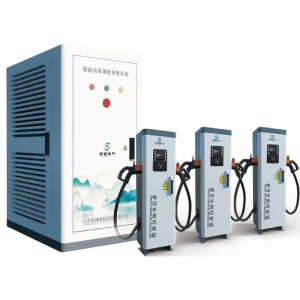
For sites with several dispensers or a requirement to allocate power across many parking bays, a centralized architecture may deserve separate evaluation. Dingsheng’s 360kW/480kW group charging rectifier cabinet represents a different system route from a standalone 160kW unit. The correct choice depends on the number of ports, expansion plan, redundancy strategy and service model.
What Software and Payment Interfaces Must Be Frozen?
The charger, charge-point management system and payment environment must be treated as one operating chain. Define the required backend protocol and version, network method, SIM or Ethernet responsibility, authentication method, tariff logic, remote start/stop, alarm handling, firmware policy and transaction-data ownership.
OCPP can support interoperability between charging stations and management systems, but the version number alone is not enough. Optional profiles, security settings and implemented functions vary. Buyers should request a feature matrix and integration test against the intended backend. If payment terminals, mobile applications, RFID cards or roaming services are required, specify who supplies and validates each interface.
Field connectivity is often tested too late. A charger can pass a factory power test and still fail to operate commercially because the mobile signal is weak, firewall rules block communication or payment certification belongs to another scope. Include connectivity and transaction tests in site acceptance.
How Do Climate and Site Layout Change the Hardware Scope?
Temperature, humidity, rainfall, dust, salt exposure, altitude, drainage and direct sunlight influence enclosure, cooling and maintenance requirements. Buyers should state the real environmental range and installation location, then request evidence for the offered variant. Avoid assuming that an outdoor appearance proves suitability for every climate.
The layout must provide safe vehicle movement, cable reach, bollard or impact protection, accessible emergency isolation, maintenance clearance, lighting and drainage. The foundation, anchor pattern, underground conduit and cable-entry position should be checked against the civil drawing before work starts.
Cable handling is a practical operating issue. A long or heavy cable can serve more vehicle inlets but may be harder to return correctly. If a retractor or support arm is required, include it in the quotation and clearance study rather than adding it after installation.
Which Configuration Fits Each Operating Scenario?
| Operating scenario | Configuration emphasis | Evidence to request | Main trade-off |
| Public highway or retail fast charging | Wide vehicle compatibility, payment and network uptime | Connector matrix, backend test, payment scope and service response | Broader interfaces increase integration work |
| Fleet depot with scheduled returns | Power sharing, load management and departure readiness | Fleet charging simulation and simultaneous-session logic | Peak power may matter less than managed overnight throughput |
| Commercial site with limited transformer capacity | Demand cap and future expansion path | Site load study and control hierarchy | 160kW hardware may operate below rating until the grid is upgraded |
| Two-bay standalone site | Dual-gun reach, independent sessions and bay layout | Power-allocation sequence and dimensional layout | Two connectors still share the available charger/site power |
| Multi-port charging hub | Centralized power allocation, redundancy and service access | System architecture, port allocation and failure-mode plan | A group-charging design may fit better than repeated standalone units |
What Should FAT, SAT and Commissioning Prove?
Factory acceptance should verify the agreed hardware, nameplate, connectors, protective functions, user interface, communication functions and power-allocation behavior using a defined test setup. Site acceptance should then verify the installed electrical interfaces, network, payment or authorization flow, vehicle sessions, emergency controls and defect closure.
The charger should be tested with representative vehicles or a validated simulator covering the required voltage and connector cases. If two simultaneous sessions are a buying reason, the acceptance plan must test two-session allocation rather than only one connector at a time. The internal guide on DC fast charging station FAT, SAT and commissioning provides a complementary acceptance path without replacing the configuration decision in this article.
Define ownership for open defects, software retest, utility energization, training, spare parts and final handover. A charger that powers on is not necessarily ready for commercial operation.
Representative Scenario: A 160kW Charger on a Constrained Depot Supply
Representative scenario — not a claimed customer case.
Business Background: A delivery fleet plans one dual-gun charger for vehicles returning in two evening waves.
Problem: The buyer selects 160kW based on the fastest vehicle, but the existing transformer has limited spare capacity and two vehicles frequently connect at the same time.
Cause: The RFQ does not define site demand limits, dual-gun allocation, vehicle charging curves or departure deadlines.
Solution: The buyer prepares a vehicle and arrival matrix, reserves power for other facility loads, defines a managed site cap and tests the two-session allocation sequence. The charger can then be evaluated by departure readiness and daily throughput rather than nameplate power alone.
Buyer Decision Value: The project avoids an unnecessary transformer assumption while preserving a documented path for higher output when grid capacity grows.
What Information Belongs in a 160kW DC Charger RFQ?
Send the utility voltage and available capacity, site single-line diagram, charger quantity, simultaneous-demand assumption, vehicle matrix, connector requirement, bay layout, cable reach, climate data, backend protocol, payment method, communication network, load-management requirement, civil interface, local compliance requirements, FAT/SAT plan, spare-parts expectation, destination and project schedule.
Submit those inputs through the Dingsheng charging project review. A supplier can then identify missing interfaces, compare standalone and centralized routes, and prepare a quotation around the actual operating conditions.
Frequently Asked Questions
Will every EV charge at 160kW on a 160kW charger?
No. Actual power is limited by the vehicle’s charging curve, battery state, temperature, voltage compatibility, charger allocation and any site demand cap.
Does a dual-gun 160kW charger provide 160kW to both vehicles?
Do not assume so. Confirm whether 160kW is the total charger output and obtain the exact fixed or dynamic power-sharing sequence for two sessions.
Can a 160kW charger operate on a site with less available power?
Possibly, if the charger and site controller support an approved demand limit. The project must confirm control behavior, minimum operating conditions and the effect on charging time.
What is more important: peak power or daily energy throughput?
That depends on the business model. Highway sites may value short sessions, while fleets may prioritize all vehicles being ready by a deadline under a managed power limit.
Is OCPP compatibility enough to guarantee backend integration?
No. Confirm the protocol version, supported profiles, security configuration and required functions, then complete an integration test with the intended management platform.
Should the RFQ include civil and electrical installation?
Yes, at least as a clear responsibility matrix. Define who supplies foundations, cables, switchgear, protection, earthing, communications, commissioning and local approvals.